Xi Jinping’s New Silk Road: Reviving Confucian Culture
April 5—China has launched something for the world which has never existed before in human society. The creation of the BRICS New Development Bank (NDB) in the Summer of 2014, and China’s inauguration of the Asia Infrastructure Investment Bank (AIIB) in the Spring of 2015, with 48 nations signing on as Founding Members (despite intense pressure from the Obama Administration to boycott China’s initiative), marks the beginning of a revolutionary transformation of civilization. This historic process can only be understood in the context of the cultural and economic decay now driving the United States into both economic collapse and strategic confrontation with Russia and China, which could soon explode into global thermonuclear war and the annihilation of civilization as we know it, while China is undergoing a renaissance of the great Confucian culture which has driven every period of progress and scientific advance in the history of modern China.
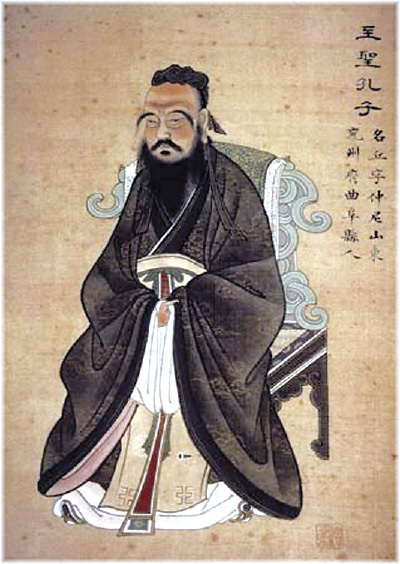
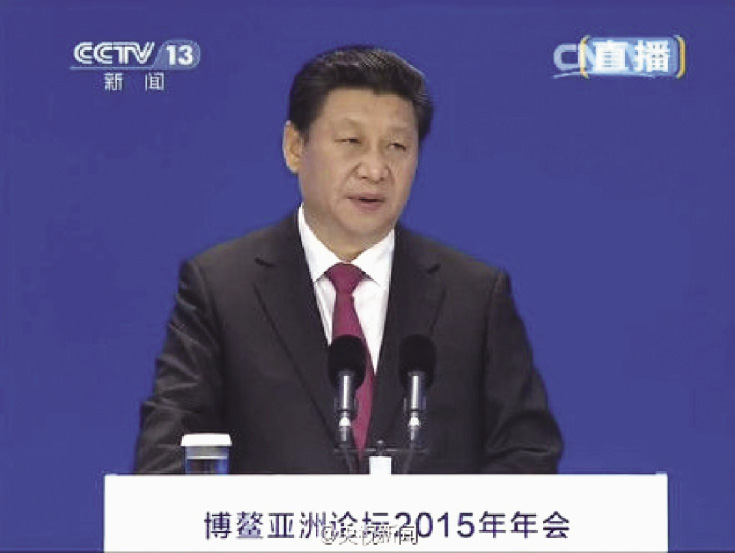
President Xi Jinping’s announcement of the New Silk Road at the September 2013 meeting of the Shanghai Cooperation Organization in Kazakhstan, and the New Maritime Silk Road in Indonesia in October 2014, touched off what has now become, together with the BRICS initiative, the greatest burst of infrastructure development on a global scale in history. The only comparable process was the vast infrastructure development of the United States by Franklin Roosevelt in the 1930s—except this new process is global in scope. Xi Jinping has even called personally on President Obama to join the process, bringing the world together to raise the standard of living and productivity of the human race, in a “harmony of interests” which America once championed as its own.1 Today it is the concept of Harmony introduced by Confucius (551-479 BC) which is inspiring China to offer “win-win” cooperation among all nations in great infrastructure projects of benefit to all mankind.
The ugly reality of the current global crisis is that the United States, under the Bush and Obama Presidencies, is a decadent, dying culture, fostering deadly austerity, perpetual warfare, and licentious social degeneracy, which is openly attempting to destroy the cultural optimism of the Chinese nation, and its vision and dedication to global development.
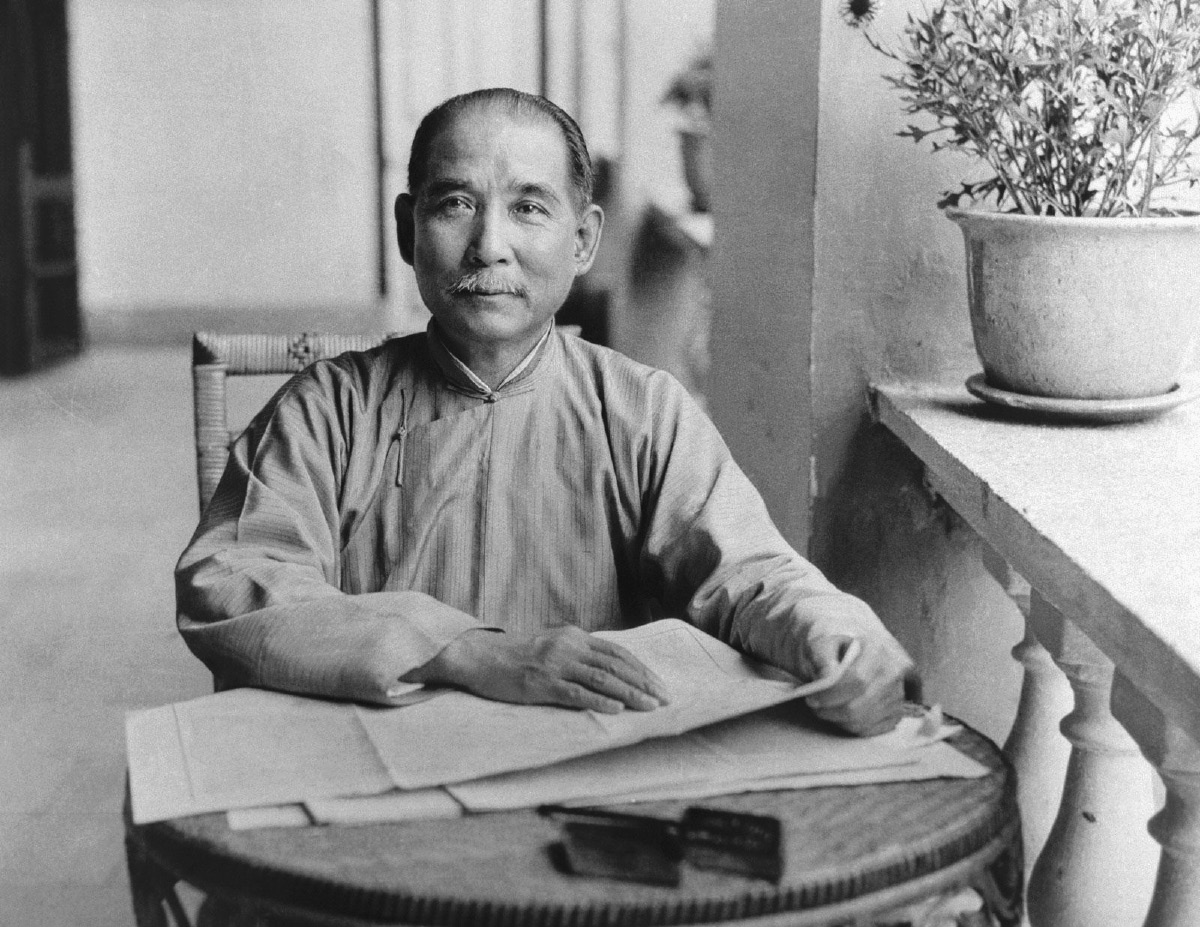
Ironically, the current renaissance taking place in China is significantly influenced by the “Harmony of Interests” which characterized the original American System of political economy, which was introduced into China by perhaps its greatest citizen, Sun Yat-sen (1866-1925), the father of the Republican Revolution in 1911, overthrowing the imperial Qing Dynasty and bringing the American System of Alexander Hamilton to China. Sadly, that American System has been systematically destroyed in the America of the Bushes and Obama, even while it is alive and well in China.
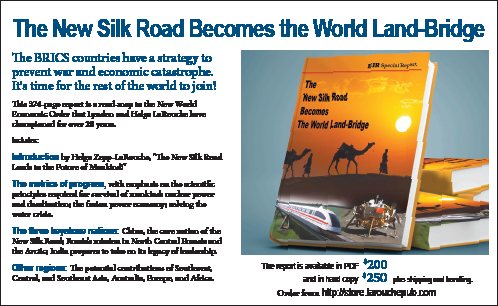
These developments in China and the BRICS nations (Brazil, Russia, India, China, South Africa) have been a victory for Lyndon and Helga LaRouche, who began an international campaign for the New Silk Road soon after the fall of the Soviet Union in 1991, as a means of bringing the nations of the world together around great development projects of mutual benefit.
In her recent series of meetings in China, Helga Zepp-LaRouche emphasized the importance of the dozens of conferences around the world, organized by the Schiller Institute (founded by Mrs. LaRouche in 1984), calling for the New Silk Road as a basis for ending the imperial Cold War divisions of the world once and for all, and unleashing the creative potential of the human race.
Sun Yat-sen and the American System
Sun Yat-sen was at the same time a Confucian, a Christian, and an advocate of the American System. Nearly a century ago, he set in motion the process which Xi Jinping has now embraced, while taking it far beyond Sun’s original design.
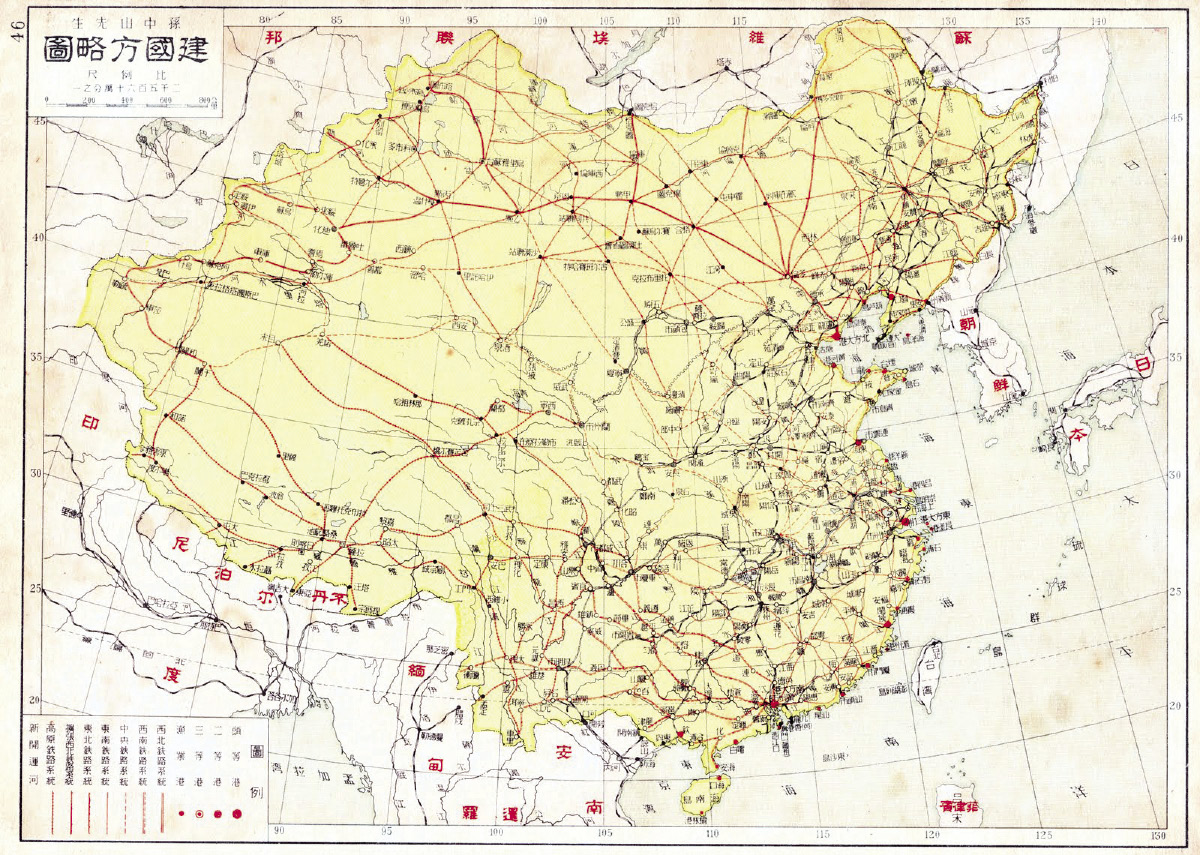
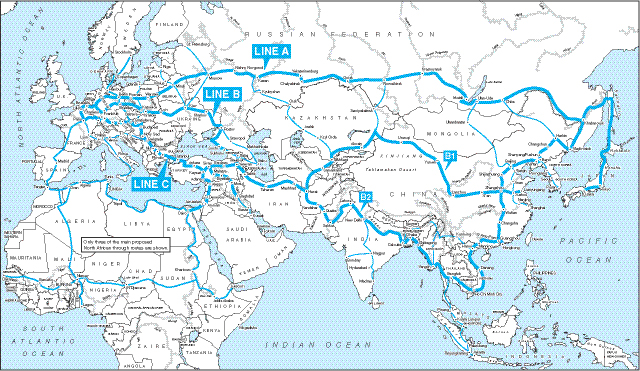
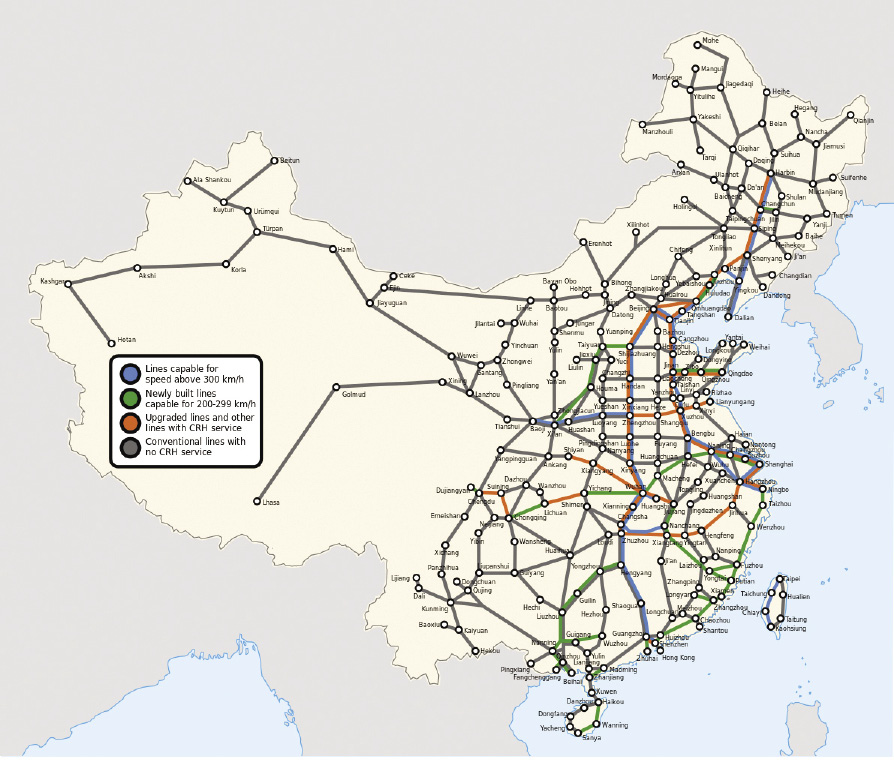
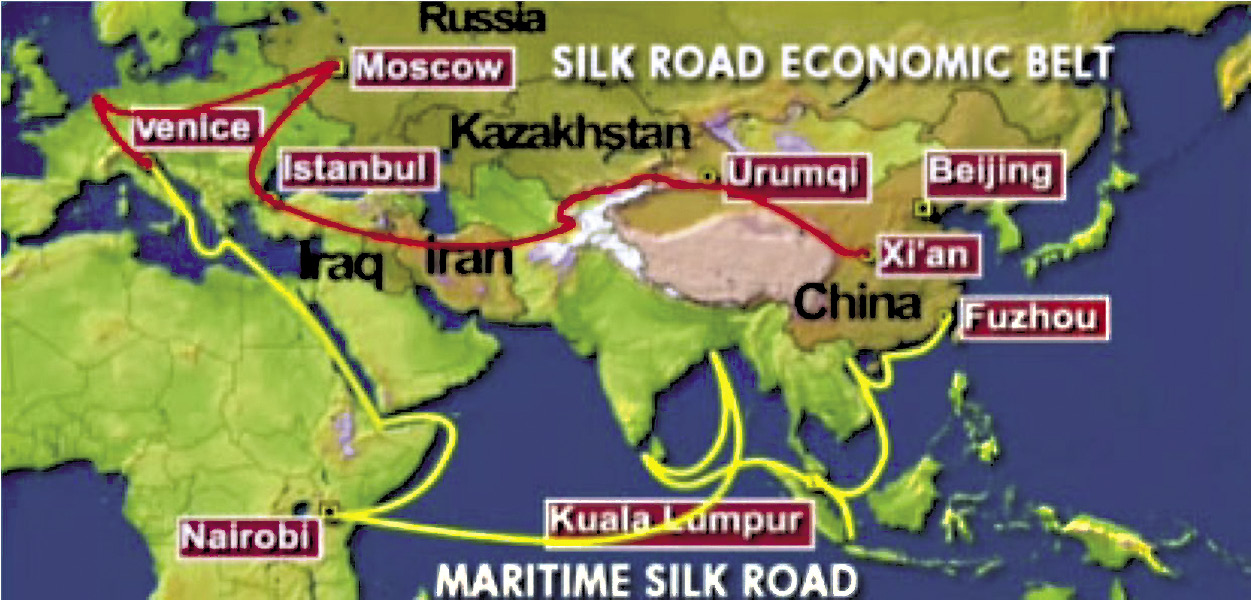
A comparison of three maps provides a graphic demonstration of the historical connections between the vision of Sun Yat-sen, the proposals of the LaRouches, and the policies and plans of President Xi Jinping today. These are: Figure 1, Sun Yat-sen’s 1919 proposal for a vast railroad and canal development for China, reaching out into Russia, Central Asia, and Southeast Asia; Figure 2, the three prongs of the New Silk Road (then called the Eurasian Land-Bridge) proposed in 1992 by Lyndon and Helga LaRouche—the northern route through Russia, the central route through Central Asia, and the southern route through Southeast Asia; and Figure 3, showing China’s current rail network and proposed extensions. The philosophical connection among these three, while not as easy to demonstrate through sense perception, is the more profound, the more crucial to understand, if the world is to survive and prosper in this moment of crisis.
Sun’s proposal came at a moment of global crisis similar to our own. With the conclusion of the British-instigated world war (later called World War I), Sun foresaw the future. “The recent World War,” he wrote, “has proved to mankind that war is ruinous to both the conqueror and the conquered, and worse for the aggressor. What is true in military warfare is more so in trade warfare. I propose to end the trade war by cooperation and mutual help in the development of China. This will root out probably the greatest cause of future wars. The world has been greatly benefitted by the development of America as an industrial and commercial nation. So a developed China, with her 400 millions of population, will be another New World in the economic sense.” If the Western nations were to fail to apply the war machine to such great developments, he warned, a new war would be inevitable—as indeed it was.
Sun was a student of the American System of Alexander Hamilton and Abraham Lincoln. Unfortunately, as he recognized clearly, under the Presidency of British imperial asset Woodrow Wilson after the war, “the U.S. has completely failed in peace, in spite of her great success in war. Thus, the world has been thrown back to her pre-war condition. The scrambling for territories, the struggle for food, and the fighting for raw materials will begin anew.” The West refused to heed his advice or to support his proposals—and, as he had warned, a new, more horrible depression and war ensued in the 1930s and 1940s.
We are now facing a far more horrendous crisis of civilization, as President Obama is following the British Empire’s drive for war on Russia and China, in an age of thermonuclear weaponry. Sun Yat-sen’s Confucian and American System advice has been heard by today’s Chinese leaders, as well as by Russia’s current leaders. Americans would do well to study his work, to help restore the American System in the U.S. itself.
Sun’s Confucianism
Sun was a converted Christian, having learned about Christianity from his American teachers in Hawaii, where he had gone from his home in southern China with his brother in the 1870s and ’80s to work and study.
But Sun was also a Confucian, although he was a fierce opponent of the ideology of the dominant Confucian leaders of his day, who had accommodated themselves to both the degenerate imperial rulers of the Qing Dynasty and the even more degenerate British imperial overlords of China at the end of the 19th Century.
When the British gunboats arrived in China, loaded with opium to enslave the Chinese people, they did what they always did in nations targeted for colonial domination—they profiled the philosophical currents there, in order to support those Aristotelian currents which rejected the Platonic view of man as a creative being, dedicated to uplifting all human beings through republican principles and scientific investigation. The Aristotelian tradition instead views man as an animal, born either master or slave, and willing to submit to the power of nature rather than to master it.
In China, they found this degenerate view within the Daoist and Legalist traditions, which had opposed Confucianism from its inception. In particular, they embraced a school which, although it called itself Confucian, rejected the Confucian view of man based on the creative powers of the mind, in favor of the philological study of the original Confucian texts, called Evidential Research, arguing that no changes could be made from the literal interpretation of those texts—i.e., pure British empiricism.
These scholars, who were also local government officials due to the Chinese system of choosing officials based on examinations of the Confucian texts, not surprisingly became the compradors of the British opium traders, centered in Canton (today’s Guangzhou).
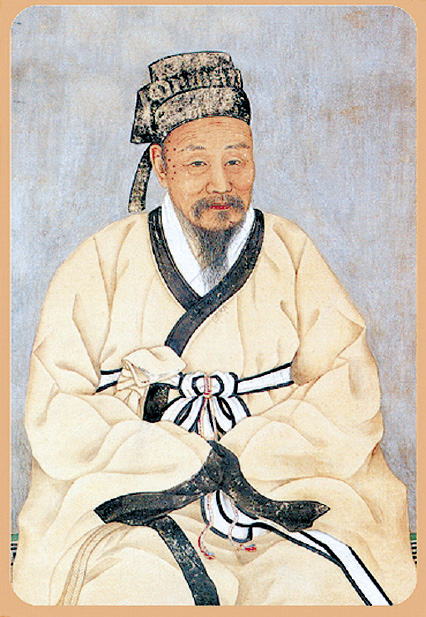
Sun’s Confucian worldview drew instead on the tradition of the greatest mind of the Song Dynasty’s Confucian Renaissance of the 12th Century, Zhu Xi (1130-1200 A.D.). Zhu Xi and his School of Principle (Li) revived the teachings of Confucius and his follower Mencius, much as the European Renaissance revived the teachings of Plato from Greek antiquity.
This Confucian worldview was consistent with the European Renaissance view of man characterized by the great philosophers and statesmen Nicholas of Cusa and Gottfried Wilhelm Leibniz, and with the American System of Benjamin Franklin and Alexander Hamilton, which was itself inspired by the works of (1646-1716). Leibniz recognized his own concept of the monad in Zhu Xi’s concept of Li, meaning “principle.” To Zhu Xi, Li was a universal, eternal principle, indivisible, beyond time or place, and prior to all created things, governing the order of things and events. Each individual thing possessed its own principle, which found its meaning in its relationship to the universal. To Leibniz, this corresponded to his discovery of the monad, the concept that all created things are defined not in themselves, but through their connection to the universe as a whole, through the constant process of change and development.
Zhu Xi and the American System
Leibniz was, in a certain fundamental sense, the founder of the American System of Political Economy developed by such Leibnizians as Cotton Mather and Benjamin Franklin, and inherited much later by Sun Yat-sen as a student in Hawaii. The concept of the “pursuit of happiness” in the Declaration of Independence came from Leibniz’s idea of happiness as the singular fruit of virtue. The American System principle of physical economy, located in scientific discovery, also came directly from Leibniz. It is thus instructive to note the close relationship between the Preamble to the American Constitution and one of the most important contributions to Chinese philosophical thought by Zhu Xi.
To develop his notion of scientific method, Zhu Xi drew upon the most famous passage from the Book of Rites (one of the “Four Books”—the Confucian classics), the preface to the Great Learning, believed to have been written by Confucius himself. The passage is compared here to the Preamble to the U.S. Constitution:
The Great Learning, from the Book of Rites, as interpreted by Zhu Xi:
The ancients, wishing that all men under Heaven keep their inborn luminous virtue unobscured, first had to govern the nation well; wishing to govern the nation well, they first established harmony in their household; wishing to establish harmony within their households, they first cultivated themselves; wishing to cultivate themselves, they first set their minds in the right; wishing to set their minds in the right, they first developed sincerity of thought; wishing to have sincerity of thought, they first extended their knowledge to the utmost. The extension of knowledge to the utmost lies in fully apprehending the principle of things.
Preamble to the U.S. Constitution:
We, the people to the United States, in order to form a more perfect union, establish justice, ensure domestic tranquility, provide for the common defense, promote the general welfare, and secure the blessings of liberty to ourselves and our posterity, do ordain and establish this Constitution for the United States of America [emphasis added].
The Classical Chinese text, like all Classical writing, was poetic in nature, and thus metaphoric rather than rigidly precise (despite the foolish arguments of the British compradors in the Evidential Research sect). Zhu Xi interpreted the above passage in two ways that differed from traditional interpretations, and in so doing, enhanced the power of the underlying concepts, laying the basis for the 12th-Century Confucian Renaissance under the Song Dynasty.
First, the words in the opening passage: “The ancients, wishing that all men under Heaven keep their inborn luminous virtue unobscured,” had been previously interpreted as, “The ancients, in order to manifest luminous virtue to all under Heaven,” i.e., implying that the ruler alone must manifest virtue in order to achieve good government. Zhu Xi insisted that the passage conveyed a far broader meaning: that all men were born with luminous virtue, and that the purpose of government was to uplift the natural, virtuous qualities of all mankind, just as the U.S. Constitution holds that a more perfect union depends upon the promotion of the general welfare, and the Declaration of Independence affirms the “pursuit of happiness” through the development of one’s creative powers.
Zhu Xi’s second new interpretation came in the concluding passage. He argued that the notion of “extending knowledge” demanded more than the empirical investigation of things, if that were interpreted as merely recording sense impressions. Rather, Zhu Xi insisted that true knowledge lies only in fully apprehending the principle in things. Besides the many physical attributes of things and events, one must investigate the invisible qualities, those characteristics which connect the object (or event) in a causal way to the changing universe—what Leibniz called analysis situs. Zhu Xi wrote that this method, applied with diligence, would reveal “the manifest and the hidden, the subtle and the obvious qualities of all things.”
This pinpoints why Sun identified profoundly with Zhu Xi’s Song Dynasty renaissance of Confucianism, and simultaneously with the American System. It also shows why he rejected the Evidentiary Research school of the British compradors, who insisted that no change is possible.
The Book of Rites thus placed a rigorous scientific method as the foundation for each link of a causal chain: as the necessary source of knowledge, of sincerity of thought, of self-cultivation, of domestic harmony, and of good government.
It was this universal conception, as developed by Zhu Xi, which was the epistemological basis for both the artistic and the scientific developments of the Song Dynasty’s Confucian Renaissance, and the explosive economic and demographic growth during that period.
Leibniz was in direct contact with the Jesuit missionaries in China in the 17th and 18th centuries, who had taken the scientific works of Johannes Kepler and other Renaissance scientists and musicians to China, and had translated the works of Confucius, Mencius, and Zhu Xi. Leibniz, who published a journal titled Novissima Sinica (News from China) based on his correspondence with the Jesuit missionaries, described the potential scientific and cultural cooperation between Europe and China this way:
“I consider it a singular plan of the fates that human cultivation and refinement should today be concentrated, as it were, in the two extremes of our continent, in Europe and in China, which adorns the Orient as Europe does the opposite edge of the earth. Perhaps Supreme Providence has ordained such an arrangement, so that, as the most cultivated and distant peoples stretch out their arms to each other, those in between may gradually be brought to a better way of life.”
But this was not to be—at least not at that time. The Venetian imperial factions within the Church in Rome rejected the idea that the “heathen” Chinese could embrace Christianity without first rejecting the entire Confucian intellectual tradition of Chinese history. Since leadership in China was selected on the basis of one’s knowledge and practice of the Confucian moral teachings, as advanced by the Song Renaissance teachings of Zhu Xi, the demand from Rome that anyone wishing to become a Christian must renounce Confucianism was tantamount to demanding that they renounce all government institutions in the country—an 18th-Century version of today’s subversive “color revolutions.”
For several decades, both the Chinese Emperor Kang Xi (1654-1722) and his Jesuit collaborators tried to convey the truth about Confucianism to Rome, but eventually the Venetian imperialists won out, forcing the Chinese to expel the missionaries altogether. Cooperation between East and West was broken in the early 18th Century, setting the stage for the arrival of the British imperial gunships.
British Subversion
One of the British tactics to counter the Confucian tradition was the recruitment of a young opium addict named Yen Fu, who was shipped off to London in 1877, where he was indoctrinated in British radical empiricism, which was to be presented to the Chinese as the essence of “Western thought.” He learned nothing of the science of Leibniz and his collaborators in Europe and the United States, nor of the great development projects of the Americans, Germans, and Russians through their cooperation after the American defeat of the British in the American Civil War.
Rather, Yen Fu became a rabid defender of amorality in science, in statecraft, and in economics, preaching the code of “wealth and power” as the criteria for truth. He translated the works of Adam Smith, Jeremy Bentham, John Stuart Mill, and the other sponsors of the British Empire, which were then presented to the Chinese as “Western thought” and whose ideas constituted the proper path to wealth and power.
On behalf of his British sponsors, Yen Fu launched an assault on Confucianism, in favor of Legalism and Daoism, which, he wrote, are the only views compatible with those of Darwin, Montesquieu, and Spencer. True indeed—and, he could have added, with the colonialization of China by the British Empire.
This was the world into which Sun Yat-sen was born in 1866, in the southern province of Guangdong.
Sun Yat-sen and the American System
It was Sun Yat-sen, schooled in the American System of Political Economy, who singularly identified and exposed the fraud behind the British portrayal of “Western thought” as Enlightenment empiricism, and went on to break the back of British imperial power in China. Sun, known in China as Sun Zhongshan, was educated in Hawaii in the 1870s and ’80s by the family of Frank Damon, who played a leading role in the work of the Philadelphia circles of Abraham Lincoln’s economist Henry Carey. This was the Henry Carey who took the concept of the U.S. Transcontinental Railroad to Russia, leading to the creation of the Trans-Siberian Railway (the first “Eurasian Land-Bridge”), and who took the American System of protection and government-directed credit policies to Germany’s Chancellor Otto von Bismarck, leading to the creation of modern industrial Germany.
Damon provided Sun Yat-sen with a sensuous grasp of the opposing worldviews competing within the West, characterized politically by the American System versus the British System. Sun utilized this understanding of Universal History, together with his own study of and insight into Chinese history and culture, to present to the world a penetrating analysis of the evil of the British Empire and its ideological roots.
Sun strenuously opposed China’s support for the British in World War I, arguing in his book The Vital Problem of China in 1917 that the British seizure of portions of China as her “sphere of influence,” and “forcing our people to buy and smoke opium,” demonstrated that “if one really wants to champion the cause of justice today, one should first declare war on England,” not Germany, adding: “But China does not want to declare any war.”
At the end of the Great War, Sun proposed a unique method for reversing the ongoing collapse of Western civilization—through cooperation in the development of China! The International Development of China, written by Sun in 1919, accused the Western nations of driving themselves into global depression and “the War to end all wars” by failing to act on the basis of truthful ideas.
Sun identified those truthful ideas as precisely those of Alexander Hamilton and the U.S. Constitution, as against the British system. Even within the United States, Sun pointed to the difference between Hamilton and Thomas Jefferson, whereby Hamilton’s federalism, rather than Jefferson’s libertarianism, lay at the root of the American System.
By unifying under the U.S. Constitution, said Sun, the new Republic attained the strength to defend against British “free trade” policies, which aimed at preventing the development of domestic U.S. industries. He insisted that the British free-trade doctrine of Adam Smith was based on the Darwinian notion of each-against-all competition, whereas “the primary force of human evolution is cooperation, and not struggle, as that of the animal world.” This was the Confucian concept of Harmony.
Sun’s International Development of China was a detailed expansion of the concepts presented by Henry Carey, including extensive rail and canal systems criss-crossing the whole of China, extending into South Asia and through Russia into Europe, coupled with rapid national industrialization. His aim was not just the transformation of China, but of the world. This plan, he wrote, must be “a practical solution for the three great world questions, which are the International War, the Commercial War, and Class War.”
Sun’s polemics against Adam Smith, J.S. Mill, and the Darwinians were counter to nearly all prevailing opinion in China during the ferment of the early 20th Century. Both the “reformers” and the “radicals” generally accepted the lie that British empiricist ideology was the only alternative to the “old thinking” (i.e., Confucianism) which, they preached, was responsible for the economic and social decay in China. Sun rejected such British subversion, and saved China in the process.
Sun Yat-sen believed passionately in the coherence of Christianity and Confucianism. The Confucian reformers of the late Qing Dynasty, however, much like today’s “fundamentalist” movements around the world, rejected ecumenicism in favor of a politicized Confucianism, while actually adopting the ideological premises of their colonial masters. The leader of the reform movement in the 1890s and early 20th Century, Kang Youwei (K’ang Youwei, 1858-1927), even proposed the adoption of Confucianism as a state religion, under the Emperor.
Yet their philosophical arguments cohered with the materialist and utilitarian ideology of British empiricism—they simply wanted a Chinese version. Sun confronted Kang Youwei and his supporters, not only on their refusal to give up reliance upon the monarchical system, but also their acceptance of the Darwinian view of man. Kang’s view of Confucianism was, not surprisingly, derived from the School of Evidential Research. Kang believed the Emperor was essential to rule China, while his interpretation of Confucianism reduced it to a set of rules of conduct, rules derived ultimately from the Son of Heaven (the Emperor), rather than from Heaven itself, as Mencius had insisted. Sun Yat-sen’s concept of a Republican government rested upon a higher hypothesis of man and nature, while the reformers refused to part with their familiar, failed assumptions.
Sun was just as uncompromising with the radicals and the emerging Marxist ideologues. This became even more critical after 1919, when the British, with President Woodrow Wilson’s full support, sold out their Chinese “allies” from World War I, by maintaining and expanding the colonial “spheres of interest” in China by the major powers, and turning over control of the former German concession, Shandong Province, not back to China, but to Japan! This sparked a massive resistance movement within China, known as the May 4th Movement.
Sun argued that the May 4th Marxists (and the new Soviet Republic), although they had identified some of the evils of the existing social and economic order, had not broken from the axioms of the British view of man as a beast. The Marxist’s “scientific materialism,” Sun said, does not break from the social-Darwinist’s “survival of the fittest” perversion of humanity.
In his Lectures on “The Three Principles of the People,” Sun wrote:
“Class war is not the cause of social progress, it is a disease developed in the course of social progress. What Marx gained through his studies of social problems was a knowledge of diseases in the course of social progress. Therefore, Marx can only be called a social pathologist, not a social physiologist.”
In The Vital Problem of China, Sun identified the root of Marxism in the Enlightenment ideology of the rule of force. While the Marxists were sincerely concerned about the problems of poverty and oppression, they were ignoring the fundamental problem of the creation of wealth, which comes about only through enhancing and mobilizing the creative powers of the entire nation—what Sun called “the law of social progress.” The young Marxists, he wrote in his Lectures, “fail to realize that China is suffering from poverty, not from unequal distribution of wealth.”
The Three Principles of the People
It is important to note that Sun Yat-sen followed the Song Renaissance philosopher Zhu Xi in identifying The Great Learning, from The Book of Rites (as quoted earlier in comparison to the Preamble to the U.S. Constitution) as the core of China’s highest moral and intellectual tradition. In the opening pages of his published Lectures from 1917-19, in which he introduces his concept of “The Three Principles of the People,” Sun writes: “We must revive not only our old morality, but also our old learning . . . , the Great Learning: Search into the nature of things, extend the boundaries of knowledge, make the purpose sincere, regulate the mind, cultivate personal virtue, rule the family, govern the state, pacify the world.”
He expanded upon China’s responsibility, as called for in the Great Learning, in a passage which cannot fail to provoke a reflection on the vision of Xi Jinping today:
“Let us pledge ourselves to lift up the fallen and to aid the weak; then, when we become strong and look back upon our own sufferings under the political and economic domination of the Powers, and see weaker and smaller peoples undergoing similar treatment, we will rise and smite that imperialism. Then will we be truly governing the state and pacifying the world.”
Sun’s “Three Principles of the People,” which served as the unifying principle for the Chinese Republic, were inspired directly by Abraham Lincoln’s Gettysburg Address, defining a true republic as “government of the people, by the people and for the people.” Sun’s Three Principles are: 1) national sovereignty (of the people), 2) republican government (by the people), and 3) the general welfare (for the people). Taken together, wrote Sun, “these Three Principles are identical with Confucius’ hope for a Great Commonwealth.”
Sun also specifically identified the psychological problems which could potentially block the Chinese from embracing and implementing these Three Principles. He saw the greatest danger in the influence of British radical liberalism among the leaders of the May 4th Movement, which influence was under the personal direction of Bertrand Russell, London’s foremost psychological warrior.
Sun, like Henry Carey before him, singled out John Stuart Mill for criticism, denouncing his advocacy of extreme individual liberty, which, Sun warned, would soon become “unrestrained license.” Such libertinism would destroy the national cohesion required for social progress, he warned, and the Chinese people “shall become a sheet of loose sand.”
The British War Against Sun Yat-sen
Sun’s Republican Revolution of 1911 threw a scare into the British. The Revolution was not entirely successful, in that Sun Yat-sen was forced to strike a deal with the head of the Qing Dynasty Army, Yuan Shi-kai, who pledged to adhere to the Republican Constitution forged under Sun’s direction. With British backing, Yuan broke that pledge, and even attempted to declare himself Emperor. Although that effort failed, the result of Yuan’s sabotage of the Republic was the division of China into regions governed by competing warlords.
The British were pleased with Yuan Shi-kai, and even more with the era of the warlords, since a divided China, and weakening of Sun Yat-sen, protected their interests. However, they knew that Sun’s influence threatened the entire Asian branch of the Empire, or more.
The sellout of China at the Versailles Conference in 1919, which imposed the will of the winners of the war on the rest of the world, had been forecast by Sun Yat-sen in his The Vital Problems of China. Sun predicted that China’s support for the British would simply encourage them to chop China into pieces, as prizes to the stronger nations which helped London destroy Germany. This was in keeping, Sun wrote, with the “Balance of Power” mentality of British geopolitics: “When another country is strong enough to be utilized, Britain sacrifices her own allies to satisfy its desires, but when that country becomes too weak to be of any use to herself, she sacrifices it to please other countries.”
He compared British relations toward its allies to that of a silk farmer to his silkworms: “after all the silk has been drawn from the cocoons, they are destroyed by fire or used as fish food.”
Versailles was total confirmation of Sun’s insight. To the British, Sun’s International Development of China represented the greatest single threat in the world (the U.S. was “safely” in the hands of Anglophile racist Woodrow Wilson at the time), the threat of a reemergence of “American System” ideas and programs.
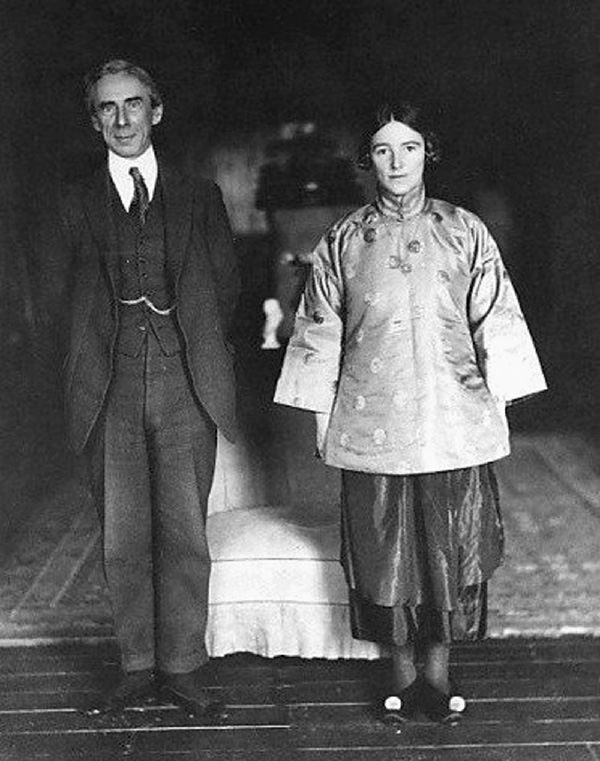
The British deployed their leading colonial warriors into China to attempt to isolate Sun Yat-sen—Bertrand Russell and his American counterpart John Dewey. Russell spent a year in China in 1920-21, and wrote a book, The Problem of China, in 1922. Russell blamed China’s backwardness not on a century of British warfare and looting—but on Confucianism! He attacked the Confucian tradition, and praised Daoism for its anti-scientific doctrine—the Green doctrine of today—that man must accept “nature” as it is, denying the Christian (and Confucian) belief in man’s creative powers to discover the laws of the universe and to transform nature. He even glorified the Legalist Qin Shi-huang from the 3rd Century BC for burning the Confucian classics and burying Confucian scholars alive.
Russell’s historical writings had a particularly deleterious effect in China, since his books on the history of philosophy and science had become a standard source on “Western thought.” Leibniz, in particular, the East’s greatest friend and most profound analyst of China’s philosophic contributions, was slandered by Russell as “the champion of ignorance and obscurantism.” Russell’s Nietzschean intentions towards China were quite openly pronounced: “China needs a period of anarchy in order to work out her salvation.”
Although John Dewey maintained a formal distinction between his “American Pragmatism” and the Hobbesian and Nietzschean radicalism of Russell, the Chinese have historically, and correctly, linked the two men as a common source of (false) knowledge on “Western thought.” Dewey, a professor at Columbia University, had instructed several young Chinese scholars in his “deconstruction” of classical methods of education, in favor of a “learn through doing” variety of pragmatism. He was deployed to China directly by the Morgan banking interests (London’s primary arm of control over the U.S. economy and ideology), serving as a journalist for the Morgan-spawned New Republic during his two years in Beijing.
The Cultural Revolution—a British Policy
Although the infamous Cultural Revolution (1966-76) in China came nearly half a century after the Russell/Dewey visits to China, I believe that that national nightmare for the Chinese people can be traced to their influence.
At the core of the hysteria was Bertrand Russell’s anti-Confucian polemic, as the ruling clique during the Cultural Revolution, known as the Gang of Four, waged an anti-Confucius campaign targeting the intellectuals (including especially Zhou Enlai, the Chinese leader most dedicated to scientific development and peaceful relations with the West) as the “stinking ninth category” (on a scale of 1 to 9); turned child against parent in a reflection of Russell’s hatred of the Confucian code of honoring ones parents; sent students to the countryside to learn from the peasants as called for by Dewey’s de-schooling and his “learn by doing” polemic against classical education; and rejected science and technology in favor of labor-intensive mass work projects, in keeping with Russell’s hatred of industrial development and glorification of the “noble peasant.”
The opening up of China after the death of Mao Zedong and the demise of the Cultural Revolution has changed the world dramatically, bringing much of the Chinese population out of extreme poverty and making China a major force for development in the world. There has also been a resurgence of interest in Confucianism, including the setting up of hundreds of Confucius Institutes around the world, to promote Chinese culture and to teach the Chinese language.
Under Xi Jinping, China has unleashed an even more ambitious process, beyond the great development plans of Sun Yat-sen, through the New Silk Road process and new international financial institutions, uplifting the livelihood of the peoples of Asia, Africa, and South America through vast infrastructure development, and even going beyond the development of the biosphere, reaching out into space—even as the United States abandons its space program—to view the Earth from the perspective of the Solar System as a whole.
In Conclusion
We have now come full circle—except that it’s not a circle, because we have now reshaped and deepened what we only dimly understood at the start. We began by pointing to the revolutionary, unprecedented breakthroughs for human progress which China is leading today—even as you read this. We said that exactly these Chinese initiatives were earlier discovered and widely promoted by Lyndon and Helga LaRouche, during their “Eurasian Land-Bridge” and related campaigns from the 1990s through the present—basing themselves on Lyndon LaRouche’s development of physical economy, on top of the initial platform provided much earlier by Gottfried Leibniz.
But, as we showed, China’s early 20th-Century revolutionary leader and genius Sun Yat-sen had also fought for this same program, basing himself both on the true understanding of Confucianism, on the one side—and, on the other, on the American System of economics of Alexander Hamilton, which he had studied and fervently adopted as a young man—as against the British system, which he fiercely opposed.
Against this, we have profiled over a century of attempts by the British Empire, to snuff out all truthful scientific understanding in China—as approximated by true Confucianism. Stop a moment to contrast London’s attempts to stamp out the analogous movement in North America. From 1688 through the American Revolution and the Civil War, the Empire sought to destroy us militarily—but it failed. Then, after the slaveholders, London’s proxy, lost the Civil War, London turned to subversion. Despite serious defeats for London since 1865, twenty-six recent years under the Bush family and Obama, have been the fruits of the success of this campaign of British subversion of the U.S.
In the 19th Century, Britain tried to destroy China through military aggression, narcotics, and all forms of subversion. It seemed that they had succeeded, but then they were forced to send Lord Bertrand Russell and John Dewey to subvert China once more in the 20th Century. With the catastrophic Cultural Revolution (1966-76), it seemed that China had been destroyed for good—but no! Under Deng Xiaoping, China rallied—somewhat as Russia has rallied itself once more under Vladimir Putin, from its destruction by British Intelligence “free-market” fraudsters during the 1990s—although the cases of China and Russia differ widely.
Bertrand Russell is dead, fortunately, but his intention and his mentality continue to rule. This is the Bertrand Russell who wrote in 1946 in the Bulletin of the Atomic Scientists, that the Soviet Union must be destroyed by nuclear bombs if it refused to kneel. This is what his heirs intend for China (and Russia, and their allies) today. However, Britain no longer has any nuclear forces to speak of. It is Barack Obama who must carry out this attack for London, and Barack Obama who must be removed, now, if nuclear holocaust is to be prevented.
The failed culture is trying to kill off the successful culture, during the brief moment remaining while it still has the ability to do so. The far reaches of human history stretching into the future—if it does—are being shaped during these present hours. If we succeed, then the Confucian Great Commonwealth is within our grasp.
Bibliography
Michael Billington, “The Deconstructionists’ Assault on China’s Cultural Optimism,” Fidelio, Fall 1997.
Michael Billington, “Toward the Ecumenical Unity of East & West: The Renaissances of Confucian China and Christian Europe,” Fidelio, Summer 1993.
Dr. Cui Hongjian, “Confucius in China Today,” a speech to a conference of the Schiller Institute in Germany, EIR, May 3, 2013.
Robert M. Wesser and Mark Calney, “Sun Yat-sen’s Legacy and the American Revolution,” EIR, Oct. 28, 2011.
Xi Jinping, Speech to the Sept. 24, 2014 meeting of the International Confucian Association..
1. The concept of the harmony of interests was developed by Abraham Lincoln’s economist Henry C. Carey, who, in 1851, published the book The Harmony of Interests: Agriculture, Manufacturing, and Commercial.