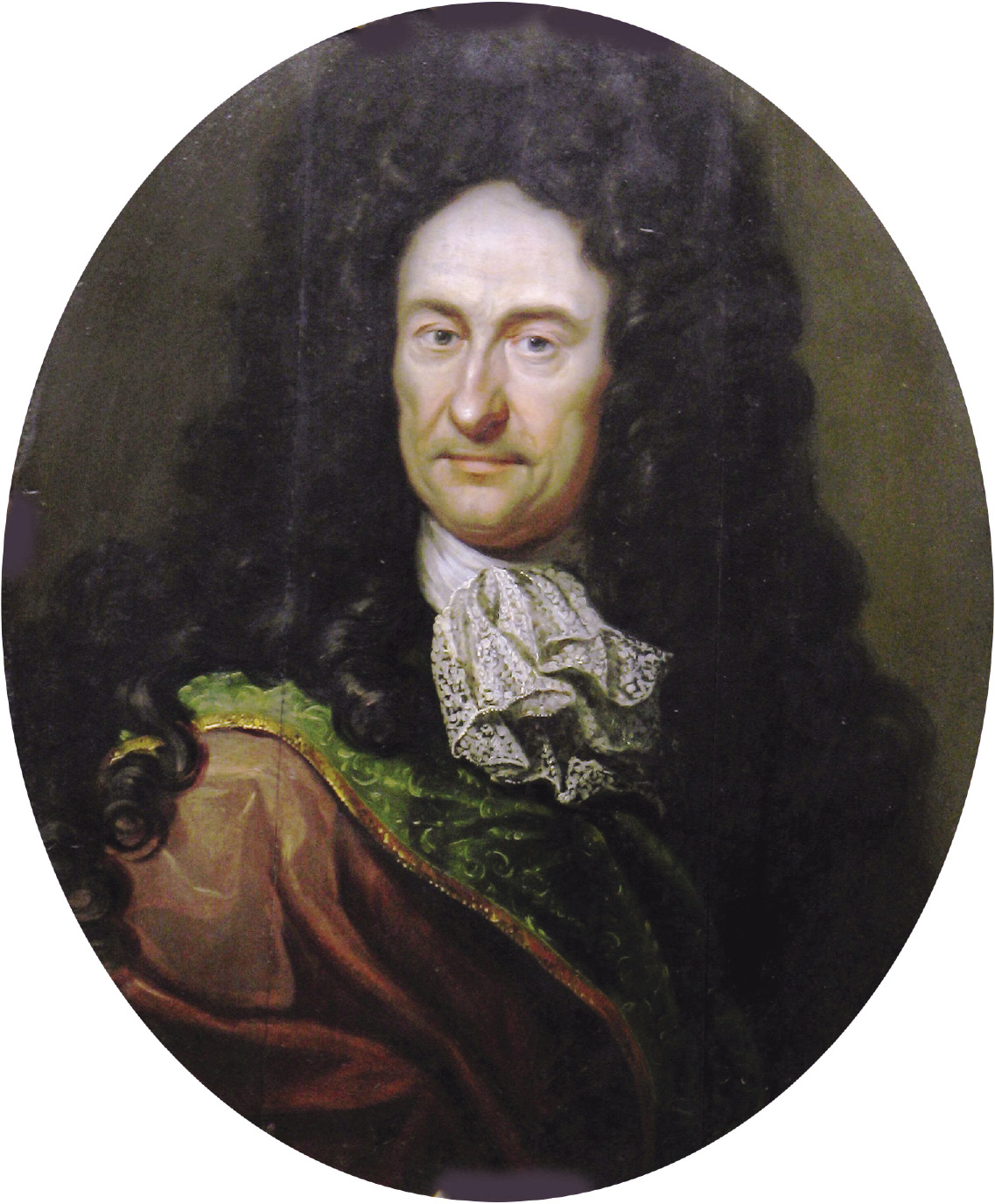
Gottfried Leibniz collaborated with Peter the Great in Russia, to establish the Russian Academy of Sciences in 1724. His “Novissima Sinica” (1697) analyzed the writings of Confucius, Mencius, and Zhu Xi, and made them known across Europe.
MICHAEL BILLINGTON
Leibniz, LaRouche, and the U.S. Link with China, Russia
EIR Asia specialist Michael Billington gave this speech to the Schiller Institute conference in San Francisco on June 29, 2013.1
As has been discussed here, the Obama Administration and its British controllers are driving the world very rapidly toward war against Russia and China, over Syria, which Russia will not allow to be turned over to terrorist mobs as was done in Libya; meanwhile in Asia, Obama has adopted the Air-Sea Battle doctrine for a war with China.2
My intention here is to show you that the idea that Russia and China are natural adversaries of the United States is entirely a British concoction, despite the fact that many dumbed-down Americans have swallowed the British Kool-Aid. The fact is that the natural connection between the United States and Asia—both Russia and China—began long before the founding of the United States as a nation-state, and even before the “discovery” of America by Christopher Columbus. America began, in fact, as a thought-object in the mind of some of the greatest minds of Western civilization—in particular, Nicholas of Cusa and Gottfried Leibniz. It was as real then as it is today, for the nation is not just a physical location, or a government, recognized only by our senses, but it is a dynamic process, an idea, the City on the Hill, the New World.
Like Lyndon LaRouche today, Cusa and Leibniz not only dreamed about the future, they saw the future—both the horror of a future under imperial domination, and the great potential of the New World which they set about to create a republic free of the oligarchical control of European monarchs and global Empire. As we will see, Gottfried Leibniz had already established the natural alliance between the future United States and both Russia and China, before the official founding of our nation.
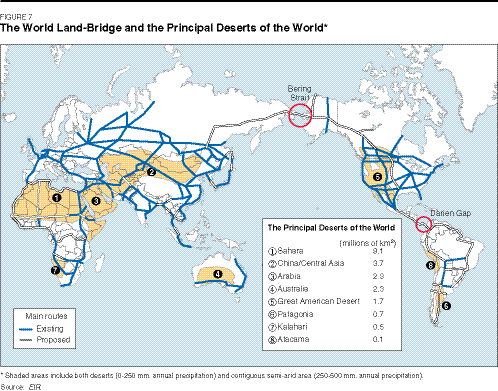
That natural alliance was restored under Franklin Roosevelt, to defeat the British-created Nazi movement, and is finally coming back into being today under the inspiration of Lyndon and Helga LaRouche, based on the concept of a New Paradigm for the Survival of Civilization. Great projects, such as the Eurasian Land-Bridge, and the tunnel under the Bering Strait, uniting Russia, China, and the United States by rail, and bringing them together into a common mission for the future, can and must fulfill the creative discoveries of our forefathers, and end the power of Empire once and for all.
Leibniz Brings ‘News from China’
The discovery of America by Columbus, as is now well known, can be attributed directly to Nicholas of Cusa, and to his close friend and colleague Paolo Toscanelli, who suggested to Columbus that the Far East could be reached by sailing west, including the belief that a New World lay in between Europe and Asia. Columbus carried with him on his voyage a map provided by Toscanelli.
As I reported last November in Frankfurt, at the first of these New Paradigm conferences, Leibniz was not only a follower of Cusa, and the seminal philosopher and scientist of his age, but also one of the great statesmen of history. He worked with Peter the Great in Russia to establish the Russian Academy of Sciences in 1724, worked closely with the Jesuit missionaries who had become the core of the scientific institutions in China, and even arranged a treaty between Russia and China over border issues and cooperation—the first East-West treaty in history. He published a journal, Novissima Sinica (News from China), in 1697, which analyzed the writings of Confucius, Mencius, and the greatest mind of the 12th-Century Song Dynasty Renaissance, Zhu Xi, which had been translated by the Jesuits, and made them known across Europe. A quote from that journal will be relevant to my report on the developments in the U.S.
I consider it a singular plan of the fates that human cultivation and refinement should today be concentrated, as it were, in the two extremes of our continent, in Europe and in China, which adorns the Orient as Europe does the opposite edge of the Earth. Perhaps Supreme Providence has ordained such an arrangement, so that, as the most cultivated and distant peoples stretch out their arms to each other, those in between may gradually be brought to a better way of life.
In his analysis of the Confucian philosophic outlook, Leibniz said: “It is pure Christianity, insofar as it renews the natural law inscribed in our hearts.”
Remember this concept for later.
Leibniz in America
The American Founding Fathers were profoundly affected by the works of Leibniz, and maintained contact with the Leibniz circles in Russia, especially in the Russian Academy of Sciences. During the American War of Independence, British warships were seizing Russian (and other) ships which were trading with the colonies, until Benjamin Franklin and other members of his American Philosophic Society made direct appeals to their associates in the Academy of Sciences in St. Petersburg and certain Russian diplomatic contacts, leading to the creation of the League of Armed Neutrality. The League of Armed Neutrality declared that Russia (and other officially neutral nations) had the right to trade with the colonies, and would consider any British attack on neutral merchant vessels as an act of war.
After the war, American naval hero John Paul Jones went to Russia, and helped build the Russian Navy, and, of course, America’s greatest statesman John Quincy Adams became the first Minister to Russia in 1809. Leading Russian circles translated and published Alexander Hamilton’s “Report on Manufactures” in 1807, telling the Tsar that its principles were fully applicable for developing Russia as a continental country. And the U.S. Army Corps of Engineers worked directly on Russia’s first railroad, from St. Petersburg to Moscow, in the 1840s.
The British spent much of the 19th Century trying to break up the United States and Russia (and China), through warfare and economic sabotage. The Crimean War against Russia in the 1850s was aimed at splitting up Russia; it was soon followed by the British-instigated Civil War in the United States, intended to split this nation, and to maintain free trade in slaves, and in cheap cotton from the slave plantations. To some extent, the Civil War was also an extension of the two British Opium Wars against China in the 1840s and 1850s—again, waging war to defend the free trade in slaves, and also opium.
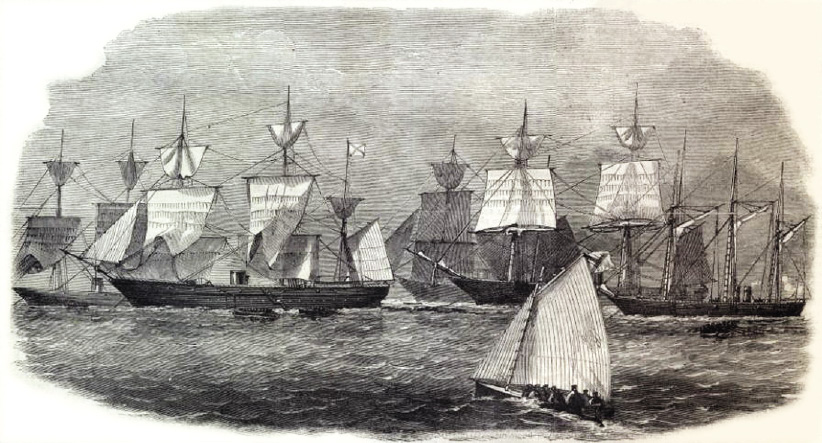
Again, the U.S. ties with Russia were crucial in the victory over the British Confederacy. How many people today know that the entire Russian fleet was deployed into New York Harbor, and also, right here, near San Francisco, in 1863, at the crucial point in the Civil War? The Russians had informed the British and their French allies that, were they to proceed with their plan to intervene on behalf of the Confederacy (a peace mission, you understand, a humanitarian intervention to protect civilians, due to the Brits’ moral concern and the responsibility to protect civilians in the Confederacy from the marauding Northern armies), then the Russians would intervene to defend the legitimate government of the United States.
If this sounds familiar to what is going on in Syria today, that is no coincidence.
Lincoln and Russia
President Abraham Lincoln also understood, even as war was breaking out, that the United States was extremely vulnerable, as long as the continent remained divided. California had become a state in 1850, after the 1848 Gold Rush brought tens of thousands of Americans—and thousands of Chinese—to California, but transport to the West Coast took several months, and was treacherous. This was one reason that part of the Russian fleet came to San Francisco—to prevent any British incursions in the unprotected region on the Pacific.
So Lincoln and the Congress launched the Transcontinental Railroad project in 1862, even as war was raging, to connect the nation from east to west by rail. The result, of course was the development of cities and farms across the continent, and eventual statehood for all the area in-between.
Another purpose was the outreach to Asia. The U.S. had been largely excluded from Asia—in fact, our major commerce in Asia before the Civil War had been carried out by Boston merchants, outright British agents, who were openly part of the British opium trade—including the family of William Weld, the Massachusetts U.S. Attorney who prosecuted LaRouche in the 1980s.
Efforts by courageous missionaries and others to counter the British in China and Asia generally were easily crushed by the overwhelming British power. But the Transcontinental Railroad was an arrow through the continent pointing directly at China; it opened up the growing industrial might of the Union to trade and investment in Asia (Figure 1). It is well known that 80% of the workforce on the Railroad was Chinese, and that the Chinese workers were greatly respected for the quality of their work.
Less well known, is that Russian engineers were in San Francisco at that time, and, as the telegraph wires spanned the North American continent along with the railroad, so also, Russia and the U.S. began building telegraph wires up the northern coast of the Pacific, through Russian America (now Alaska), with the intention of crossing the Bering Strait and crossing Russia all the way to St. Petersburg. The Bering Strait project was only deserted in 1867, when the Trans-Atlantic cable was successfully laid, but it had opened up the region, and contributed to the U.S. purchase of Alaska from the Russians at that time. And of course, the project is now being revived by the LaRouche movement, and the Russians, in the form of the rail connection over the Bering Strait, connected to the NAWAPA project and related great projects internationally—the International Land-Bridge.
Following the Civil War, Lincoln’s economist Henry Carey carried the American System and the idea of transcontinental nation building to Europe—to Germany, where Bismarck created the German nation based on American System principles; and to Russia, where Count Witte led the effort to create the Trans-Siberian Railroad, once again connecting the Atlantic to the Pacific, this time across the Eurasian continent (Figure 2).
The Oldest and Newest ‘Empires’
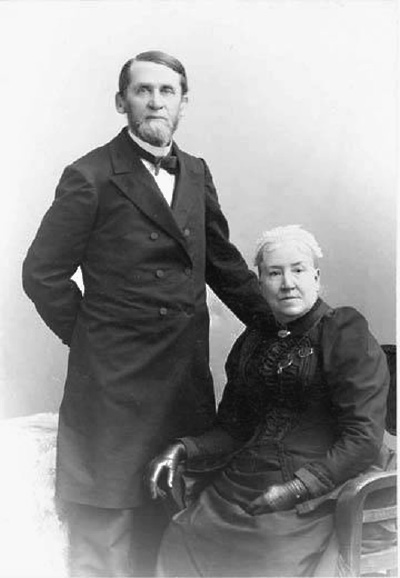
On the U.S.-China connection, I want to talk about a single individual whom you have almost certainly never heard of. But that very fact speaks volumes about what has happened to this nation. Rev. William Speer was a dentist and a Presbyterian missionary who went to Canton (Guangzhou) in 1846 to open the first Presbyterian mission there. He became fluent in Cantonese, but was forced to leave for health reasons after five years. He then spent most of the rest of his life working with Chinese immigrants in San Francisco, opening the first Asian Christian Church in the U.S. (now called the Presbyterian Church in Chinatown), as well as a school and a dispensary (now called the Chinese Hospital). He spoke widely, published many pamphlets in both English and Chinese, and authored a book in 1870 titled: The Oldest and the Newest Empires, China and the United States. (Don’t be distracted by the term “empire”—he used the term benignly to mean a nation with a universal mission.)
I want to read to you several passages from his book, which you will immediately recognize as coming from the Leibnizian tradition. On Speer’s view of China in America:
“It is hard to account for the common estimate of China and its people in Great Britain and America otherwise than by attributing it to the influence of the bad East India Company and the diabolical opium trade.”
He reports that nearly all the books on China were written by servants of the British government or by British missionaries, all corrupted by two fatal influences, namely, the monarchy, and their self-enrichment from the opium trade. So you see he is not confused about Empire.
Reflecting his debt to Leibniz and Leibniz’s global vision, consider these passages. On the nature of the Chinese people:
“Both Confucius and Mencius saw with bitterness the utter inefficiency of truth which looks no higher than earth to reform society or to stay the power of human passions.” Speer believed that there were “few nations of the world among whom the freedom of the people is more large, more squarely founded upon their intelligence, or more carefully guarded against despotism, than in China.” He notes that in the Middle Ages, China was the greatest and most civilized kingdom on Earth, but China had remained stationary while the West moved forward with the coming of the Renaissance.
In a quotation from Leibniz in all but name—and recall the quote I read from Leibniz at the beginning—Speer wrote: “For centuries past the most philosophic minds have predicted the vast consequences which should ensue when the two opposite currents of empire—one eastward, one westward, since the beginning of time—should at last meet and flow together. Upon our Pacific Coast, this consummating event of the history of the world has now commenced.”
And on the nature of the human being, he again reflects Leibniz’s insistence that the truth is written in our hearts, referring to “the eternal principles of right which the Governor of the world has written in the chambers of the human heart and made deeper and more authoritative than any statutes of human appointment.” Alexander Hamilton, he writes, “presents their nature with the clearness of the light of the Sun”:
“The Deity has constituted an eternal and immutable law, which is obligatory upon all mankind, prior to any human institution whatever. He endowed man with rational facilities by the help of which to discern and pursue such things as were consistent with his duty and interest, and invested him with the inviolable right to personal liberty and personal safety. The sacred rights of mankind are not to be rummaged for among old parchments or musty records. They are written as with sunbeams, in the whole volume of human nature, by the hand of Divinity itself, and can never be erased or obscured by mortal power.”
Elsewhere, he quotes, essentially, again without naming him, from Abraham Lincoln’s Second Inaugural Address. Remember this is published in 1870 (just five years after the end of the Civil War): “The Ruler [referring here to God], in due time, asserts and displays divine justice and power by the terrible punishment of oppressors and wrong-doers, and compensation of those who have suffered. The history of African slavery and the judgments it brought upon us is surely the lesson which this nation should never forget.”
And finally, on his global vision: “Three empires fill the vision of the future—the U.S., Russia, and China. Great Britain alone compares with them in the extent of her colonial possessions; but hers are remote and widely scattered, and will, when ripe as to the divine purpose, fall away from her, as the U.S. has done, and become centers of independent influence. Each [the U.S., Russia, and China] are animated throughout by the same general spirit, and possesses a certain unity in aims, laws, language, social habits, and religious sentiments.”
Conclusion
This vision was snuffed out, as the British, as they have done repeatedly in our nation’s history, succeeded in using ignorance and corruption to unleash in the United States an era of racist exclusion laws and similar policies to undermine the assimilation of the Chinese into the U.S. melting pot. Reverend Speer fought this insanity, and also spent some time in Hawaii, where later, the great Chinese revolutionary Sun Yat-sen was trained by American missionaries steeped in the tradition of Alexander Hamilton and Abraham Lincoln, and went on to build a Republic in China based on those American System principles.
The mission today is the same, but the consequences of failure far greater. Transforming the U.S., and reestablishing the historic alliances with Russia and China, are necessary if civilization is to survive. LaRouche has emphasized repeatedly that we must restore not only the vision, but the way of thinking itself, of the great minds who have shaped this nation, such as Cusa and Leibniz, and LaRouche, who saw the future, acted to destroy Empire, and created the City upon the Hill. It is ours to lose, or to create anew.
EIR Conference Report

Courtesy of Janus Kramer
Harper’s Weekly (1864)
Russian Tsar Nicholas II send the Russian fleet to New York Harbor and to San Pablo Bay, California (shown here), in 1863, to defend Lincoln’s Union from the pro-Confederacy British and French imperial powers.
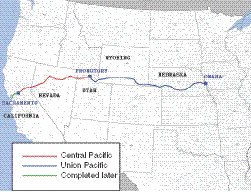
FIGURE 1
The Trans-Continental Railroad
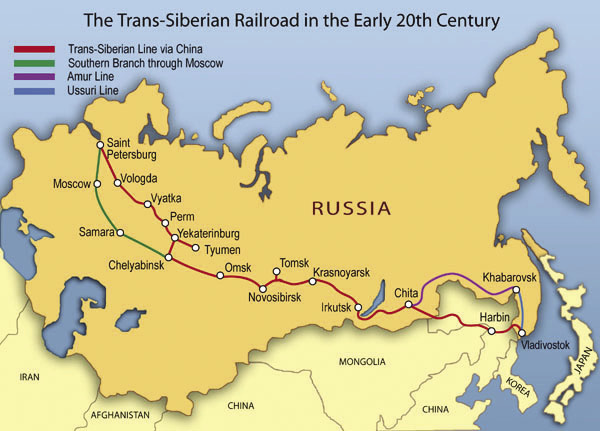
FIGURE 5
U.S. Passport Service
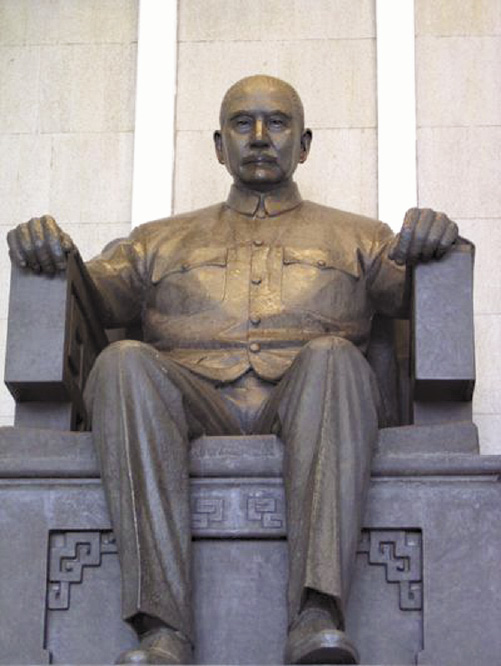
Sun Yat-sen was trained by American missionaries who were steeped in the tradition of Alexander Hamilton and Abraham Lincoln. Sun went on to build a republic in China based on those American System principles. This statue, modelled on the one in the Lincoln Memorial, is located in the Sun Yat-sen Memorial in Taipei, Taiwan.
Rev. William Speer (shown here with his wife), a Presbyterian missionary, went to Canton (Guangzhou) in 1846 to open the first Presbyterian mission there. He later worked with Chinese immigrants in San Francisco, opening the first Asian Christian Church in the U.S.
Butch Valdes: The Special Role of the Philippines
Butch Valdes, leader of the Philippine LaRouche Society, sent this greeting to the San Francisco Schiller Institute conference.
We here in the Philippines take inspiration from the words of Mr. Lyndon LaRouche, as he has on several occasions told us, via our radio program, that our country, the Philippines, has a very special role, in trying to save civilization. Just as we have been, over the past so many centuries, the gateway of Western thought moving towards the Eastern part of the world, we, today, have that special role: to share with the rest of the world’s population from this part of the world, the ideas which are needed to be assimilated, the ideas that are needed to be implemented, in order for us to save civilization from this present, ongoing collapse of the financial system, and threatening a situation that we all are very scared of, that is, World War III.
Our history with the United States goes back all the way to the 1900s, or even before—but specifically the 1900s, when the U.S. had bought us from Spain, after Spain colonized us for close to 400 years, and a new era for the Philippines started. President Franklin Delano Roosevelt gave us new hope in implementing many of the things that he had done for the United States. He paid particular attention to the Philippines, because we were, at that time, the only colony that needed to be given independence by the U.S., through the promise that he had made to the rest of the world.
After granting us independence, the sorry thing that had happened was, Roosevelt died. But not without starting certain infrastructural development programs, initiated by the very same people who may have started the Tennessee Valley Authority, putting the Philippines on a foundation which would allow us the opportunity to develop as well.
The role of the United States, as a leader nation, since 300 years ago, has not stopped. It has become even more significant and necessary at the present time. We call on the members of the international LaRouche movement; we call on the citizens of the United States of America; and we call on the leaders of the United States of America, to do everything that it takes to implement, to reinstitute the Glass-Steagall law, as a primary and necessary step towards saving not just America, not just the Philippines, but the rest of the world.
This has been your legacy since 1776, and this should be your legacy from this time on.
Wenji Victor Chang
The U.S. and China: Natural Allies For Justice, Peace, and Prosperity
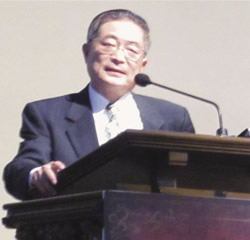
Dr. Chang, of the Institute of Sino Strategic Studies in Whittier, Calif., gave this speech to the San Francisco Schiller Institute conference on June 29.
The world is entering a critical transitional and defining moment, as the 2007-2009 financial crisis has painfully demonstrated. The political and economic systems, which have been dominated by financial oligarchs over the last several hundred years, have failed all peoples around the world, and need to be changed. Therefore, I am pleased and honored to be invited to this important conference, “The Second American Revolution and A New Paradigm for Mankind,” sponsored by the Schiller Institute.
Time and again, Friedrich Schiller’s dramas demonstrate how a person’s duty lies above his or her own personal inclinations; how he or she must be both a patriot and a world citizen. For the true interests of any one nation can never be at odds with the interests of the world as a whole. It is in this spirit that his teaching is so relevant to our attempt to establish a new paradigm.
Any rational person would agree that to overcome the ongoing financial and economic crisis requires constructive partnerships among countries and peoples in this global village. However, the world has become even more unstable since the 2008 financial crisis. Political upheavals have spread to every continent, from Africa to America. Why? It is because of increasing polarization in wealth distribution among countries and among citizens in individual countries.
Tensions even flared in East Asia, a relatively calm region before 2008. Part of the reason is the highly vocal announcement of rebalancing of the U.S. military forces: 60% of the maritime forces will be deployed to Asia.
As an American, originally from the region, I totally agree that Asia is of great importance to the future well-being of this country. However, is destabilizing the region really serving the interests of this country, really serving the interests of Asian countries, and really serving the interests of the whole world? Of course, the answer to most of the rational people is a resounding no. So why did our policymakers do this?
As pointed out by Lyndon [LaRouche], Helga [Zepp-LaRouche], and many scholars here, the source of the troubles is the financial oligarchs who have betrayed the U.S. Constitution, and have gradually taken control of U.S. politics since 1913, when the Federal Reserve was established. In this speech, I will mainly focus on why the U.S. and China are natural allies, and how to strengthen this strategic relationship.
The U.S. and China: Converging Interests
As remarked by former Secretary of State Hillary Clinton on March 7, 2012, the U.S.-China relationship is unprecedented in the history of nations. The United States is attempting to work with a rising power to foster its rise as an active contributor to global security, stability, and prosperity, while also sustaining and securing American leadership in a changing world. The two countries are, together, building a model in which both countries strike a stable and mutually acceptable balance between cooperation and competition. This is uncharted territory. And we have to get it right, because so much depends on it.
Needless to say, there are many differences between the two political and economic systems, two cultural and historical experiences. One of them is the U.S. trade deficit with China of $300 billion a year, which needs to be addressed in a constructive manner, and not degenerate into finger-pointing matches.
However, there are many converging interests between the U.S. and China. Let me name a few:
• Both countries need a peaceful and stable international environment.
• Both countries have become thoroughly, inescapably interdependent.
• Both countries, or at least most people in both countries, are committed to building a cooperative partnership based on mutual benefit and mutual respect.
• Both countries are looking for a win-win relationship, instead of a zero-sum game.
• Both countries are facing increasing polarization of wealth distribution in their respective societies. The citizens of this country need to take back our government from the hands of financial oligarchs. China needs to get rid of crony capitalism.
China and the United States cannot solve all the problems of the world, but without our cooperation, it is doubtful any problem can be solved.
There are also many similarities between the two countries:
• Their size is uncannily close, with each occupying almost exactly 6.5% of the world’s landmass.
• Both are multi-national states.
• Both are religiously tolerant countries, contrary to many smear campaigns against China. If you look at Chinese history, one thing stands out: that is, in her more than 4,000 years of history, there never was a religious war. Even Communist China, in recent years, is actually very tolerant toward different religions, as long as the religious groups are not using religion as a cover to engage in subversion and certain illegal activities.
Most importantly, Chinese and Americans share the same deepest beliefs and desires in our heart and soul, as shown by the similarities between the teachings of American Founding Fathers and the teachings of ancient Chinese philosophers and Chinese leaders of modern times. It is in this sense that the U.S. and China are natural allies.
Therefore, I shall discuss these shared values in the remainder of my presentation.
The People-First Principle
The founding principle of the U.S. is best expressed in the Preamble to the Constitution. The basic idea is to “promote the general Welfare,” and “secure the Blessings of Liberty to ourselves and our Posterity.” Our government, as envisioned by our Founding Fathers, is a “government of the people, by the people, for the people,” as eloquently presented by President Abraham Lincoln in his famous Gettysburg Address. This idea greatly influenced Chinese leaders of modern times such as Dr. Sun Yat-sen, Chiang Kai-shek, Mao Zedong, Zhou Enlai, Deng Xiao-ping, Jiang Zemin, etc.
This people-first principle is also the deepest belief in the Chinese heart and soul, as reflected in the teachings of ancient Chinese scholars.
The most important concepts of Confucius and ancient Chinese philosophy can be expressed in terms of several simple Chinese characters. As this slide shows, the first core concept is commonly translated as “benevolence” (Figure 1). But actually its meaning is much deeper and richer than benevolence. As you can see, this character consists of two parts. The left part, which looks like a human, is the Chinese character for “person.” The right part, I think you all can figure it out, is the Chinese character for “two.” Figuratively, this character means two persons, which is extended to mean the proper way to treat one another.
In a more concrete way, the starting point of benevolence is love. One needs to love your friends, love persons around you. How do we exercise love? Confucius taught us that we need to practice the Chinese ethic of reciprocity, which translated into English is, “One should not treat others in ways that one would not like to be treated.” This is the negative form of the Golden Rule. Most western cultures adopt the positive form of the Golden Rule: “Do unto others as you would have others do unto you.” This slight difference between the two cultures has a profound effect on the thinking of the two peoples.
This slide summarizes the next few core concepts. The first character (Figure 2) means that you would sacrifice yourself for the greater good of the society and the whole world. This Chinese character consists of two parts. The first (or upper) part is sheep. Sheep served as a sacrifice in ancient times. Sacrifice for what? For the greater good of your group. The second (or lower) part is “I” or “me.” In other words, you are willing to act as a sheep for the greater good of the society. This is a very important value in traditional Chinese culture. The next concept is harmony. You always seek for harmony, be it in music or in other things, and try to avoid going to extremes. The last character is equality and equal opportunity. If you combine the last two, you have the character which is translated into English as “peace.” In other words, in the Chinese mind, a lasting peace can only be built upon harmony and equality.
Conscience for Heaven and Earth
This slide shows a beautiful Chinese calligraphy of a motto treasured by generations of Chinese Classical scholars (Figure 3). I shall explain the meaning of this motto. It consists of four parts, and I shall take the liberty to make a translation (Figure 4).
The first part is to ordain conscience for Heaven and Earth. How can one do that? According to Chinese philosophy, Tao is the way of nature, and you might have heard about that. As a scholar, you need to harness the way of nature (Tao) in order to bring benefits to all the people and the world. Next is the conscience for Heaven and Earth. For example, you observe the motion of Sun and its relations with the change of seasons, which can be harnessed to benefit people. This naturally leads to the second part, which is to secure life and fortune for the people. This is the great Love.
The third part is to continue the finest teachings of the ancient sages, such as Confucius, Mencius, and others. For what purposes? This is the last part: to establish peace for all future generations.
This is the most important motto for Chinese traditional scholars. And in my view, the Chinese values, as reflected in this motto, are consistent with the teachings of our Founding Fathers and the teachings of Schiller. Therefore, I believe that the U.S. and China are natural allies, because they share the same deepest values in their heart and soul.
Promote Cooperation
So what can we do in a more practical sense? We should take the ideas as expressed by Lyndon and your group. We should promote cooperation instead of confrontation. We should build our cooperation based on science, technology, and development.
Take Far East Asia as an example. There are many tensions over there: tensions between Russia and Japan, between Japan and China, between North Korea and South Korea, etc. However, if rational people look at the real needs in the region, there really is no conflict in fundamental and long-term interests.
There are many real needs for further development. As mentioned in earlier speeches by different speakers, we should extend NAWAPA to Siberia and the North Asia; we should extend the Eurasian Land-Bridge to the U.S. and the American continent. We need to develop the vast lands of Siberia, Korea, and China, etc. It is based on these new developments that we can create new boundaries and a new spirit.
Another area for cooperation is space exploration. Just several days ago, three astronauts who completed China’s longest manned space mission returned to Earth safely, marking another step forward toward the country’s goal of building a permanent manned space station by the year 2020. The U.S. and Russia were once the pioneers in space exploration. However, in recent years, the U.S. effort has become much reduced. I think, in the future of mankind, lots of opportunities are in space, and maybe our challenges and threats one day may come from space also. I believe, in this difficult financial time, it makes a great sense to pool the resources together to jointly explore outer space.
All the above-mentioned things will help the future of both countries, but the most important thing is to build a cooperative environment. This slide shows the ideal world as envisioned by Confucius and ancient Chinese philosophers, and this is called the Chinese Dream (Figure 5). The dream is to build a world of world of great harmony and equality, a world that belongs to everybody. In my view this dream is also the American dream of the General Welfare as expressed in the Preamble to the U.S. Constitution.
The realization of this ideal world is the Chinese Dream, which is neither communist nor non-communist in character, but simply Chinese. It represents the spirit of development and progress, not just for China, but for the world. I hope that this will also be the dream of all the people in the world.
Thank you for your attention.
EIRNS/Daniel Platt
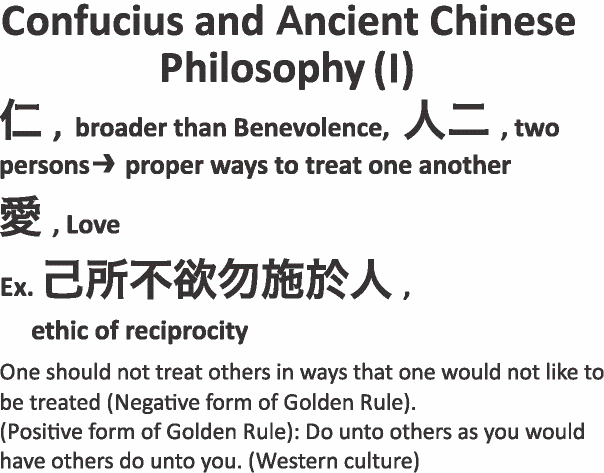
FIGURE 1
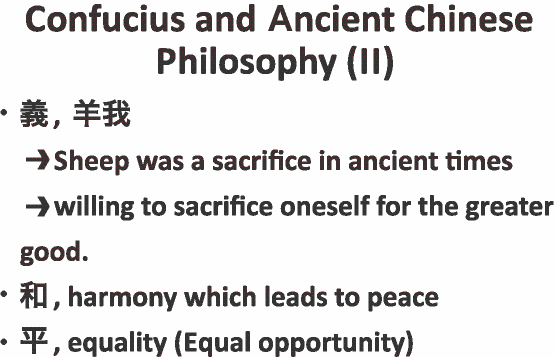
FIGURE 2
FIGURE 3
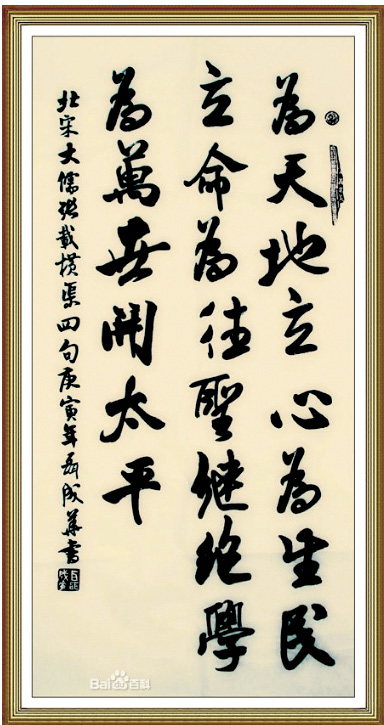
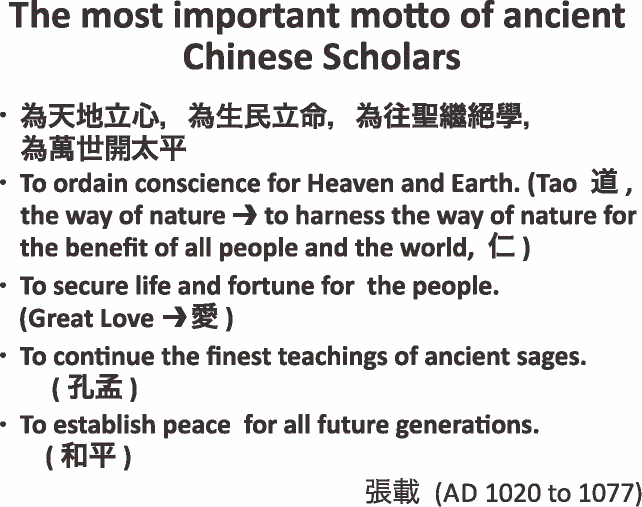
FIGURE 4
The Most Important Motto of Ancient Chinese Scholars
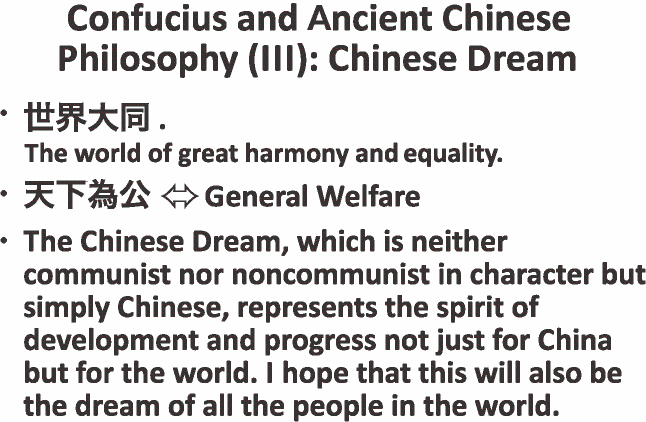
FIGURE 5
Robert Barwick
Australia—Free of the British Empire!
Robert Barwick, member of the Executive Committee, Citizens Electoral Council (CEC), Australia, gave this presentation to the Schiller Institute conference.
Good afternoon. I bring you warm greetings from Australia, even though in our Southern Hemisphere it’s the dead of Winter right now. But it’s politically hot.
I would like to present to you the strategic vision of the Citizens Electoral Council of Australia, which is the LaRouche movement in our nation. Our vision is one of vast, physical-economic development, premised upon national banking and a public credit system. We intend to play our part internationally to defeat the genocide policies and war threats coming from the financial oligarchy, which Australians for over a century have called “the Money Power.” That financial oligarchy is based in the City of London and centered on the British Crown—and the wearer of that crown, the Queen of England, happens to be our official head of state.
A new paradigm for the survival of mankind requires a process of continuous creative breakthroughs. We know from the history of science, that creative breakthroughs are made by confronting an existential paradox, and can also be prompted by grappling with an anomaly.
Australia is a nation-continent of anomalies, as Lyndon LaRouche famously said in 2003. He noted that in Australia you can find mammals that lay eggs! He talked about our paradoxical relations with the British Empire, and about the challenge of populating our nearly empty continent, including through immigration from Asia. He appealed to us (and this goes right to the heart of what I’ll present to you today); he said: “You have large deserts—it’s an opportunity! Look at all that land you can turn into fertile land, by irrigation and development.” LaRouche summed up: “You know, in life generally, it is always the eccentricities, the anomalies, that are interesting, and Australia is an anomaly.”
Indeed, our nation of Australia presents anomalies at all three levels of terrestrial existence, defined by Vladimir Vernadsky.
• First, in the non-living domain, or the lithosphere, Australia has six out of the 16 largest known impact craters on Earth. (So, for sure, the Russian proposal that the early-warning network for the Strategic Defense of Earth include greatly expanded monitoring in the Southern Hemisphere, is dead on!)
The likelihood that there was another, even larger impact, over 500 million years ago, is still being studied (Figure 1). It’s called the Massive Australian Precambrian/Cambrian Impact Structure, and it may have been a decisive event for the shift out of the Pre-Cambrian era and into the intensive development of life on Earth.
As a result of these impacts and other factors, Australia is similar to Siberia—not only in size, but in the quantity and quality of minerals beneath our soil (Figure 2). Among these are huge resources for the nuclear power industry: the world’s largest reserves of uranium; and it’s one of the world’s top three countries in reserves of thorium, a crucial fuel for fourth-generation nuclear reactors.
Though blessed with these resources, Australia also has geophysical extremes, such as the second-largest expanse of desert on the planet after the Sahara.
• In the domain of living matter, the biosphere, we have more anomalies.
Our weather extremes are closely related to the biosphere, as you can see in the stark contrast between the desert and semi-arid “Outback” areas of the continent, and the rain forests of Queensland in the northeast, shown in Figure 3, in terms of annual rainfall.
Our most famous biospheric anomaly, of course, is the prevalence of marsupials, which developed over the millions of years of Australia’s separation from other land masses. (Not to mention the monotremes—egg-laying mammals like the duck-billed platypus, that Lyn alluded to.) These are all fruitful subjects for scientific study.
• In the cognitive domain, the noösphere, we have evidence of a thrilling history of the settlement of Australia by early sea-faring peoples, by astro-navigators, well over 20,000 years ago.
And, we also have the greatest anomaly of all. Modern Australia was founded in 1788 as a prison colony and an outpost of the British Empire in the Pacific.
Yet, many of the Irish, Scots, and English people, sent out to Australia by the boatload, were political prisoners who had agitated for American-style revolutions within the British Isles. And Australia went on to create a full-fledged Hamiltonian national bank, the Commonwealth Bank, founded in 1911. During the 20th Century, this bank funded some of our greatest development projects, and the building of a world-class machine-tool industry during World War II.
Today, we live in the belly of the British Empire, and yet the CEC is a vigorous and growing wing of the LaRouche movement. Reviving Australia’s American System traditions, we intend to develop and populate the vast expanses of our continent, a process that will contribute decisively to the future of the entire, densely populated Pacific Rim growth area.
The measure of the success of new ideas is provided by LaRouche’s science of physical economy. That measure is the increase of potential relative population density.
Looking at absolute population density (Figure 4), you can see that Australia, with only 3 people per square kilometer (23 million people on 7.6 million km2), is the perfect object-lesson for the new paradigm. By comparison, the current population density of the USA, including Alaska, is 32 people per km2; for California, it’s 89 people per km2.
The first American Revolution meant doing the impossible, by defeating the British Empire, and the supposedly impossible settlement and development of the North American continent beyond the Blue Ridge. Today in Australia, the next revolution again means doing the impossible—defeating the British Crown, and moving into the biospheric engineering of an entire continent, to transform Australia from being mostly a desert, into a garden and an industrial powerhouse to benefit our nation and all mankind.
Australia’s Battle for Republicanism
From the outset, with the landing of the First Fleet of political prisoners in 1788, the question for Australians was: Would we establish an American-style republic, or remain slaves of the British Empire? We were supposed to be a slave plantation run by a landed oligarchy, but our patriotic leaders fought to follow in America’s footsteps.
Listen to the ardent early republican, the Rev. Dr. John Dunmore Lang (1799-1878), whom we call the “Benjamin Franklin of Australia,” who fought tirelessly for “freedom and independence for the golden lands of Australia,” as he put it. John Dunmore Lang wrote this about the ideals that animated him and his fellow republicans:
“The feeling of nationality . . . is the gift of God for the welfare and advancement of his creature, man. . . . The spirit of national freedom and independence is one of the most generous and disinterested, as well as one of the loftiest and most ennobling passions of human nature; and when it once animates a people, they become capable of deeds, and sacrifices, and exertions, of which they could never have supposed themselves capable before.”
In spite of the Crown’s control, republicanism has kept on bursting forth, throughout Australia’s two-century-long history. At the end of the 19th Century, we had the creation of the Australian Labor Party—spelled L-A-B-O-R, American style—and the first Labor Party government in the world. Into this fertile political climate came an American immigrant of Irish extraction named King O’Malley, a follower of Alexander Hamilton and Henry Carey. O’Malley embarked for Australia from here, from San Francisco, in 1888. He dedicated the rest of his life to one goal—national banking. O’Malley was elected to our then-new federal Parliament, where, in 1909, he declared, “I am the Alexander Hamilton of Australia. He was the greatest financial genius who ever walked the earth, and his plans have never been improved upon.” In 1911, O’Malley’s efforts gave birth to Australia’s national bank, the Commonwealth Bank.
During two world wars, the power of national banking was seared into the consciousness of the Australian people. The realities of wartime forced the City of London-based Money Power to hide its opposition to our national bank. Labor Party governments during both wars, especially World War II, were able to direct public credit to the maximum, for the war effort.
Just weeks after Pearl Harbor, our Prime Minister John Curtin announced that Australia was breaking with the British Empire and placing its hopes and resources with the America of President Franklin Roosevelt. In just three years, from 1942 to 1945, the national banking and credit policies of Curtin and his Treasury Secretary, Ben Chifley, transformed Australia from an agrarian backwater into an agro-industrial powerhouse, with a world-class machine-tool industry. This was vital to winning the war in the Pacific, under the masterful command of Curtin’s friend and ally, Gen. Douglas MacArthur.
As Prime Minister after Curtin’s death in 1945, Chifley pushed legislation through both houses of Parliament for the full-scale re-establishment of a national bank. His plan was to fund an amazing array of great economic development projects. The Queen’s Privy Council in London overturned that legislation, so that only one of those infrastructure projects was ever built—the Snowy Mountains Hydroelectric Scheme (Figure 5). Started by Chifley in 1947, and completed in 1974, the Snowy transformed Australia, and it is a model for what our nation must now do on an even grander scale.
In 1967, the American Society of Engineers hailed the Snowy Scheme as “one of the seven engineering wonders” of the modern world. It covers an area of 7,780 km2, with 16 dams, 7 power stations, 145 kilometers of tunnels, and 80 kilometers of viaducts. It diverts the headwaters of the Snowy River and two other rivers, westward across the Australian Alps into the irrigation areas of the Murray and Murrumbidgee rivers, thus creating one of the most productive irrigated areas in the world, the Murray-Darling Basin.
The Snowy Scheme was truly a joint Australian-American project. The head of the Snowy Scheme, New Zealand-born engineer William Hudson, sent a dozen young Australian engineers to the USA to be trained by those in the U.S. Reclamation Bureau who had designed and built the Tennessee Valley Authority and the great Hoover and Grand Coulee dams. Early stages of the project were designed here, in America.
Returning to Australia under Hudson’s inspiring leadership, these young engineers deployed a workforce of 33 different nationalities, drawn from displaced-persons camps all over war-torn Europe. The engineering marvel was completed on time, under budget, and with many improvements and a greater capacity than specified in its original design.
With indispensable advice and expertise from the late Prof. Lance Endersbee, who had been one of those dozen young engineers sent to America to be trained for the Snowy, the CEC, in 2002, drafted a program of nation-building for Australia. It includes advanced nuclear power, a nationwide maglev rail grid, space exploration (we have an excellent location for launches, being near the equator), high-speed shipping to tie us to the rest of Asia, and, of course, great water projects (Figure 6). We specified 18 water projects, many of which have been largely designed and are ready to go. Five of them are on the scale of the Snowy Scheme, transferring water from rivers in coastal mountain ranges, like the Clarence River in New South Wales on the East Coast, and the Fitzroy River in the West, inland to the arid regions.
One of the most exciting of these projects is the Bradfield Scheme for Watering the Inland. (Figure 7). It was drafted in 1938 by Dr. J.J.C. Bradfield, the engineering genius who built Sydney’s Harbour Bridge. Updated in the 1980s, this brilliant project for biospheric engineering has, like NAWAPA, been gathering dust on the shelf for decades.
The highest rainfall area in Australia is in tropical North Queensland, where warm, moist air from the Pacific Ocean is pushed up sharply by the Great Dividing Range, which runs the length of eastern Australia. The Tully and Herbert rivers, only 123 and 340 kilometers long, respectively, carry this rainfall straight back out to sea. Bradfield proposed a series of dams and tunnels to divert the headwaters of these two rivers through the Great Dividing Range, down into the fertile but dry plains of central Queensland, and eventually into Australia’s inland salt lake, Lake Eyre (Figure 8).
The project will reach from the far northeast of Australia, down across the continent to Lake Eyre in south-central Australia—a kind of mirror image of what NAWAPA will do in North America.
Bradfield envisaged not only the diversion of water for irrigation, but the transformation of the now-arid inland climate, through establishing vegetation and an increased permanent cycle of rainfall.
He also viewed his engineering scheme as political warfare. In 1941, Bradfield wrote, “Australia needs to adopt a long-range, constructive policy to develop, populate and defend itself. Australia must control her own economic independence, not London. A rejuvenated inland, creating employment and settling a population in comfortable circumstances, would be one part of such a long-range policy. The nation without vision perishes, but the heart and mind of any vigorous people responds to the dreams of its national destiny and will endeavor to make full use of its heritage.” Bradfield called for Australia to have a population of 40 million by 1990, on the way to an eventual population of 90 million or more.
Today, the CEC’s program is to implement the Bradfield Scheme and all these other projects. Doing so will save and expand Australia’s economy as a breadbasket for South and Southeast Asia, and a machine-tool powerhouse for Asian development.
Before his death in 2009, Professor Endersbee devoted many hours to designing a program he called the Asian Express. A high-speed rail grid uniting Australia’s major cities, in combination with a high-speed national shipping line, the Asian Express would place any part of Australia just one to four days from any part of Asia, including the world’s two largest ports, in Singapore and Hong Kong, and many other major ports (Figure 9).
The Queen Must Go!
To achieve these goals, we must defeat the British Crown. That lesson was brought home in 1974, when the Queen sacked our democratically elected Prime Minister, Gough Whitlam, after he and his government announced that they intended to “buy back the farm” from the Queen’s raw materials cartels (companies like Rio Tinto, in which she is the single-largest individual stockholder)—to reclaim control over our nation’s resources, and to build a nationwide scheme of infrastructure.
Without detailing all the evil the Crown has done, headlines from the New Citizen newspaper and CEC pamphlets (Figure 10) illustrate our fight against that evil empire. These were published since we established our national office in Melbourne in 1993, with the help of a core of intrepid LaRouche movement veterans from the United States, some of whom are here today. Most issues of the New Citizen are printed in 250,000 copies or more, an average of more than 1 for every 100 Australians. Our movement has survived and grown for two reasons: because we are animated by the universal principles espoused by Lyndon LaRouche and Helga Zepp-LaRouche, and because we have relentlessly attacked the British Crown ever since 1993.
In 2009, the CEC mobilized on the eve of the Queen’s Copenhagen Conference on Climate Change (Figure 11). Before this paper came out, 60% of Australians thought that climate change was real. After half a million of these papers appeared, the ratio reversed: 60% thought climate change was a hoax. Then-Prime Minister Kevin Rudd, a key global advocate of climate change, lost his job over this (temporarily, as we’ve just seen), as did the head of the Opposition, Malcolm Turnbull, who also toed the Queen’s line at the time.
A special issue of the New Citizen, published in 2011, went after the core of British imperial policy—Green Fascism (Figure 12). We documented that the worldwide green fascist movement was hatched by the British Crown’s Privy Council following World War II, out of the British Eugenics Society. Queen Elizabeth’s immediate family took a leading role, beginning with her husband Prince Philip, co-founder of the family’s population-reduction charity, the World Wildlife Fund (WWF).
Our exposé documented the targetting of Australia by the Royal Family with their green fascist agenda. In 1963, Philip, on the Queen’s authority, personally ordered the Governor-General’s office in Australia to organize an Australian branch of his WWF, which became the Australian Conservation Foundation. Philip micro-managed the ACF, was its President from 1971 to 1976, ordered the Australian government to fund it, and led it in a vicious campaign to crush hydroelectric development in Tasmania. The world’s first green political party, the United Tasmania Group, was founded in Tasmania in 1972 and influenced Petra Kelly to start Germany’s Green Party.
Today, Prince Philip’s successors in the ACF are campaigning to shut down food production in the Murray-Darling Basin, the agricultural miracle produced by the Snowy Scheme. They especially fear the LaRouche movement, because we are Australia’s greatest champions of development. In 2002, the WWF formed the Wentworth Group of Concerned Scientists, under Hans Joachim Schellnhuber’s buddy Tim Flannery, dedicated to stopping the CEC’s ideas for major water projects.
Four decades of green fascism and British free trade have reduced Australia’s agro-industrial economy to a raw materials quarry. At the same time, the British have expanded their plans for Australia as a strategic outpost. In 1995, Australian academic Katherine West, under British Royal Institute of International Affairs (Chatham House) auspices, presented “Discussion Paper 60: Economic Opportunities for Britain and the Commonwealth.” She identified the British Commonwealth as the core of a new British Empire, which she called “an informal financial empire.” West proposed that Australia be a British “bridgehead into Asia.” Thousands of British corporations now have their Asia-Pacific headquarters in Australia.
This is the setting in which Barack Obama, in 2011, announced the “Asia Pivot,” meaning the Anglo-American imperial targetting of China. Australia’s northernmost city of Darwin has become a base for 2,500 U.S. Marines. The ports of Perth and Brisbane are being upgraded to host the U.S. Navy, and Australia’s extensive electronic eavesdropping and signals intelligence infrastructure is being boosted for a nuclear showdown. Former Prime Minister Malcolm Fraser warned in September 2012 that present U.S. and Australian policy towards China was leading to nuclear war (Figure 13).
In a 2004 issue of the New Citizen, we contrasted a Hamiltonian National Bank to the policies of the international financial oligarchy (Figure 14) highlighting the role of the Bank for International Settlements (BIS) in promoting fascism in the 1930s, including the movement then known as the Synarchy. Based in Switzerland, the BIS was founded by the Bank of England in 1930 to be the “central bank of the world’s central banks.” The looting of Europe by the Nazis, sanctioned and assisted by the BIS, was the forerunner of today’s regime of genocide, being promoted by the same BIS and its Financial Stability Board, through austerity measures and the theft program known as “the bail-in” or “the Cyprus template” (Figure 15).
Typical of Australia’s subservience to British finance today, two Australians hold the #2 and #3 positions on the FSB Steering Committee. Right now they are trying to push bail-in powers through the Australian Parliament, which the CEC is presently blowing up in their faces.
We intend to win that fight, so we can implement a national bank and a credit system, to fund the Bradfield Scheme and develop our continent, fulfilling Australia’s special role for Asia and the planet (Figure 16).
Thank you.
EIRNS/Daniel Platt
FIGURE 1
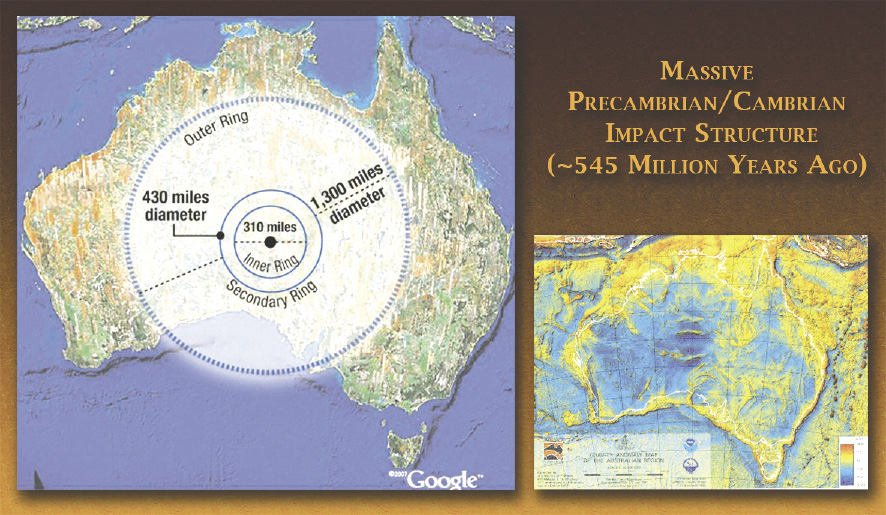
FIGURE 2
Australia ‘in’ Siberia
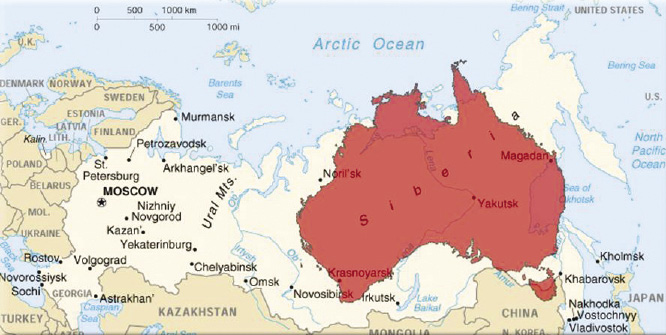
FIGURE 3
Rainfall in Australia
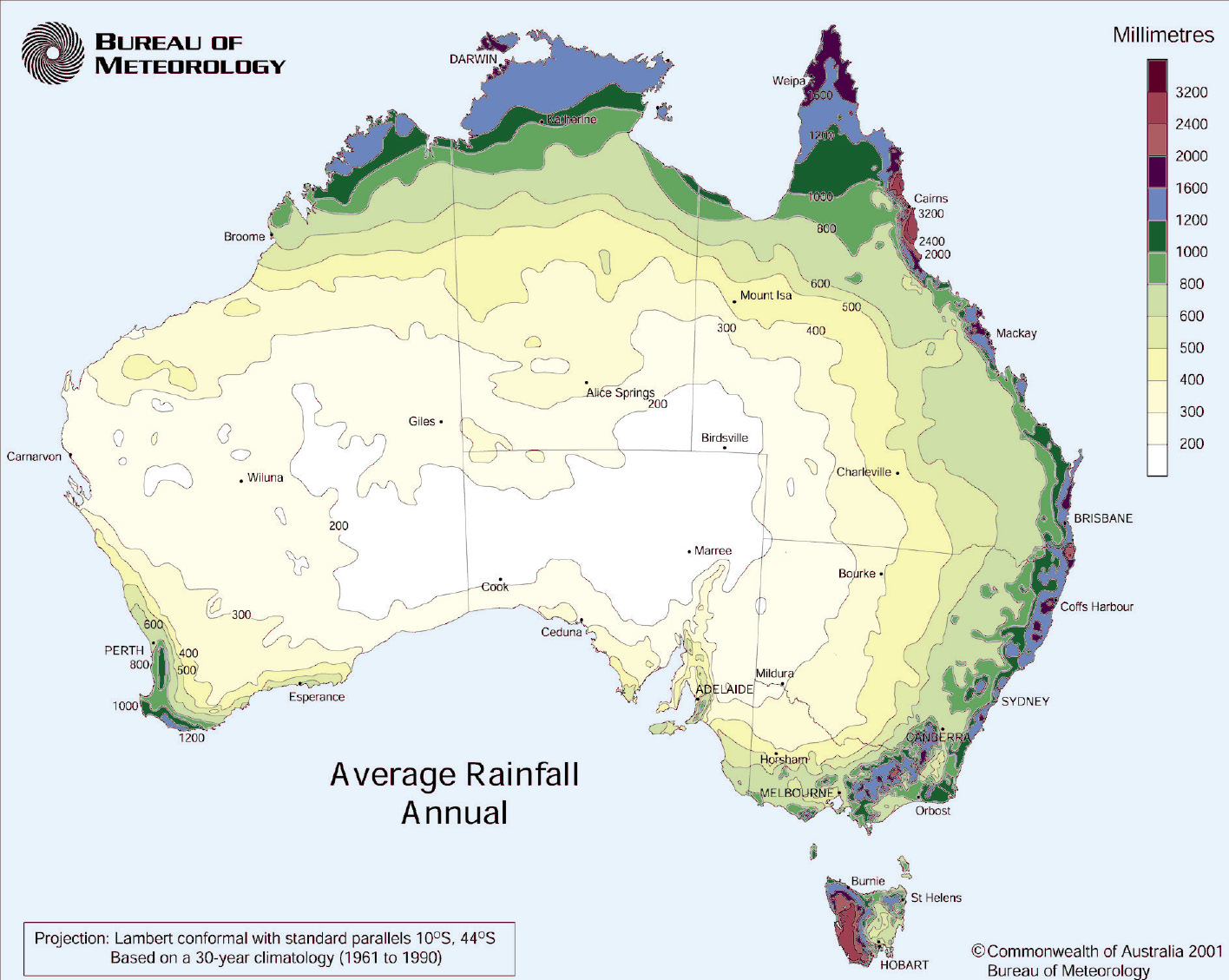
FIGURE 4
Population Density (2000)

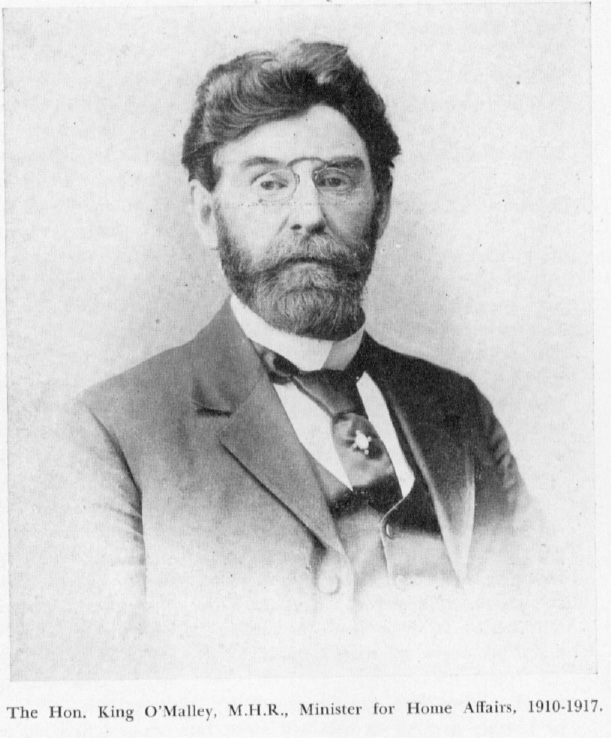
King O’Malley, Minister for Home Affairs, 1910-17
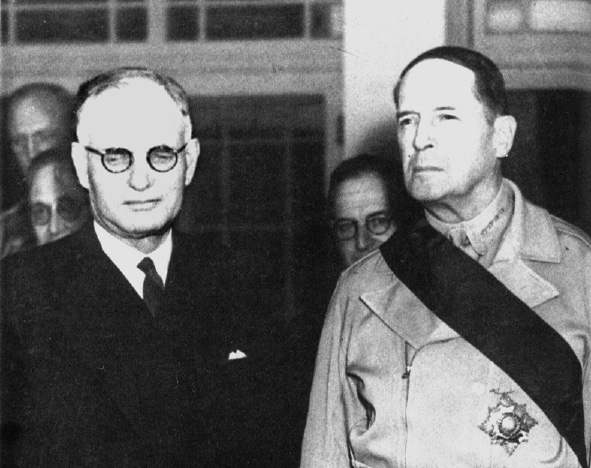
Prime Minister John Curtin and Gen. Douglas MacArthur.
FIGURE 5
Snowy Mountains Scheme
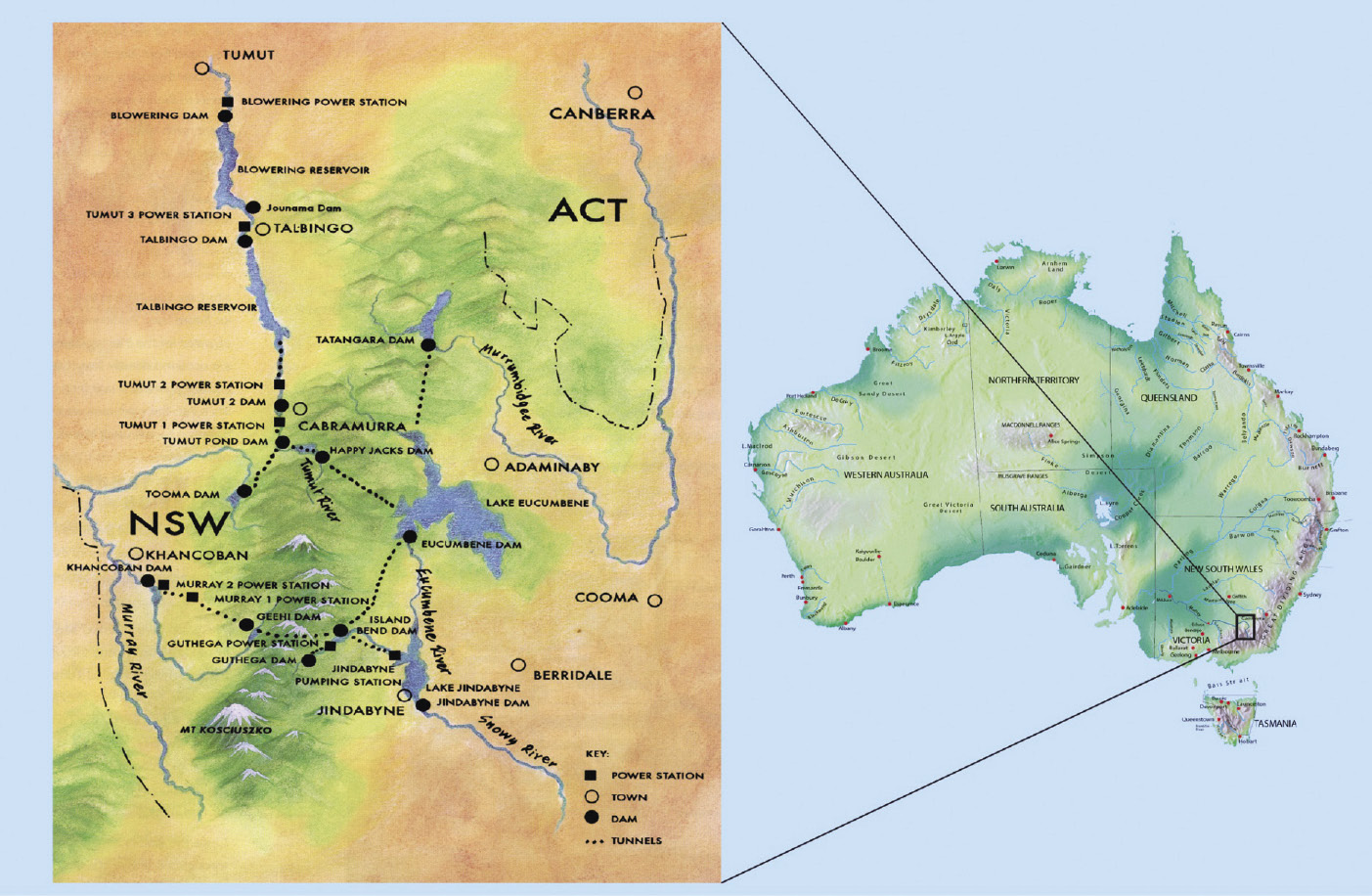
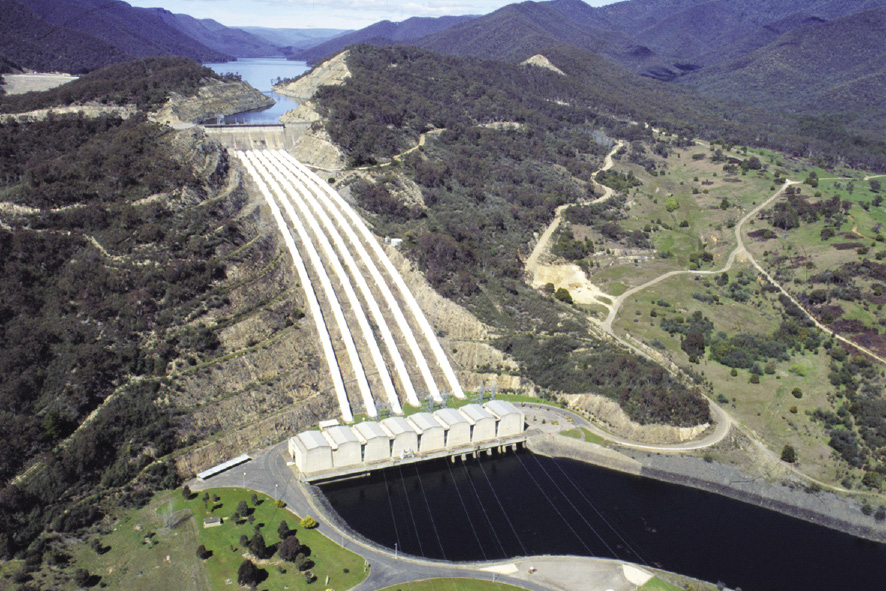
FIGURE 6
New Great Water Projects
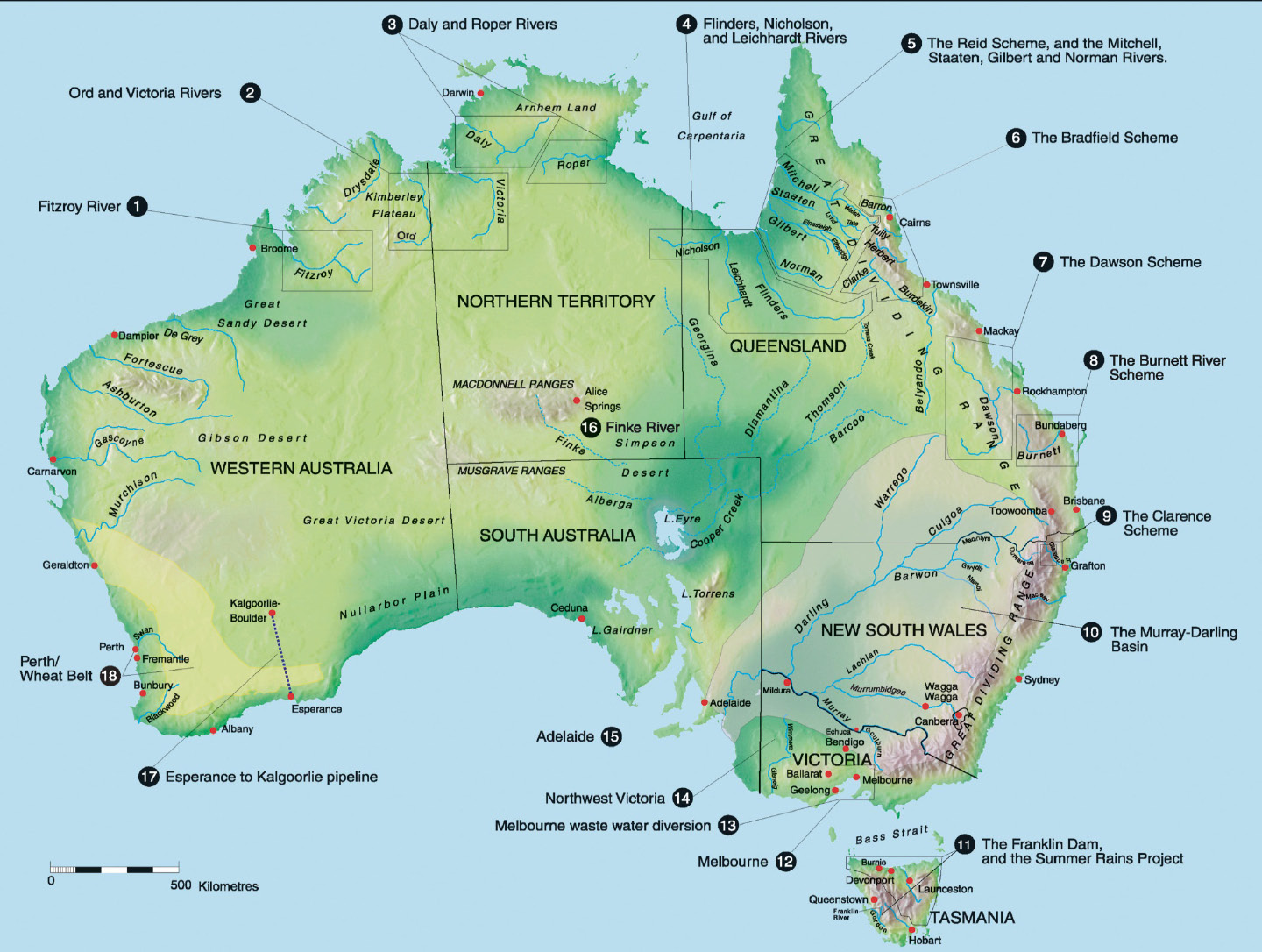
FIGURE 7

FIGURE 8
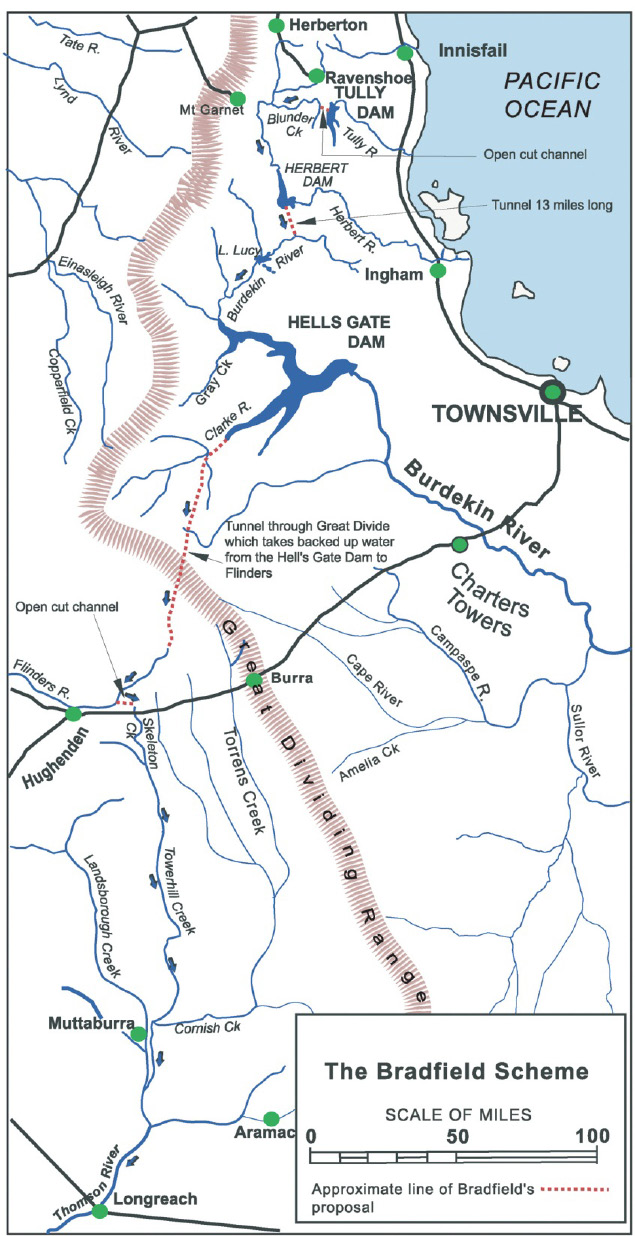
Primary river diversion engineering along the Great Dividing Range.
FIGURE 9
Container Ports in Asia
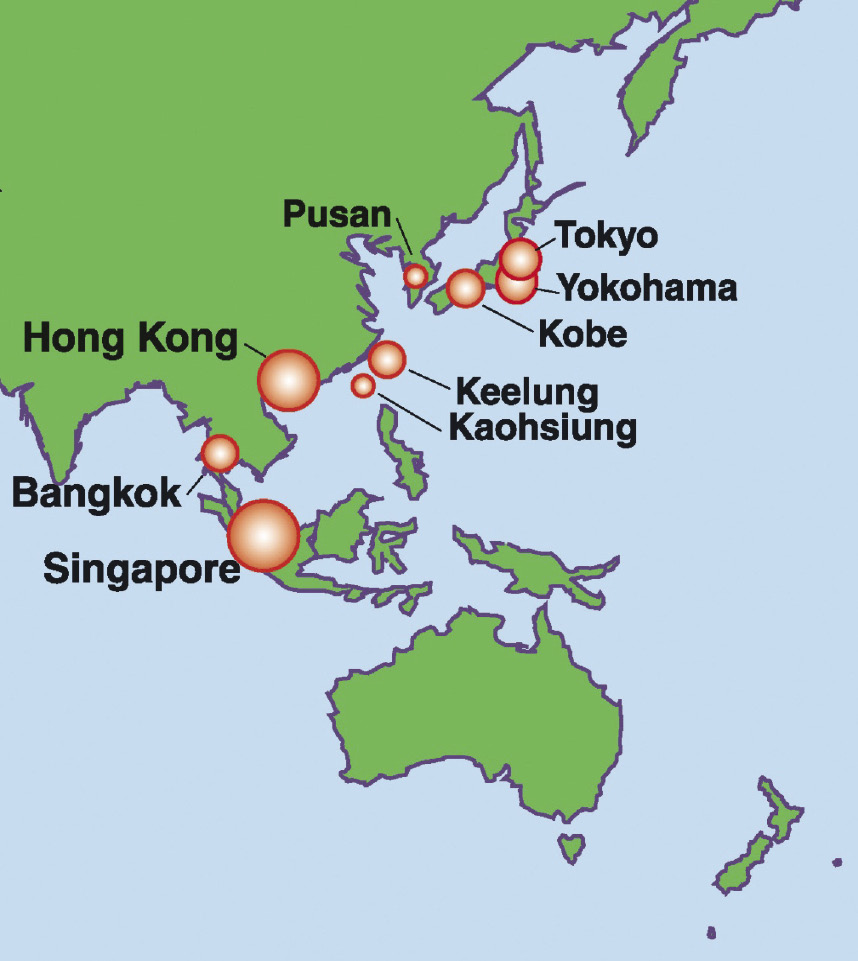
FIGURE 10
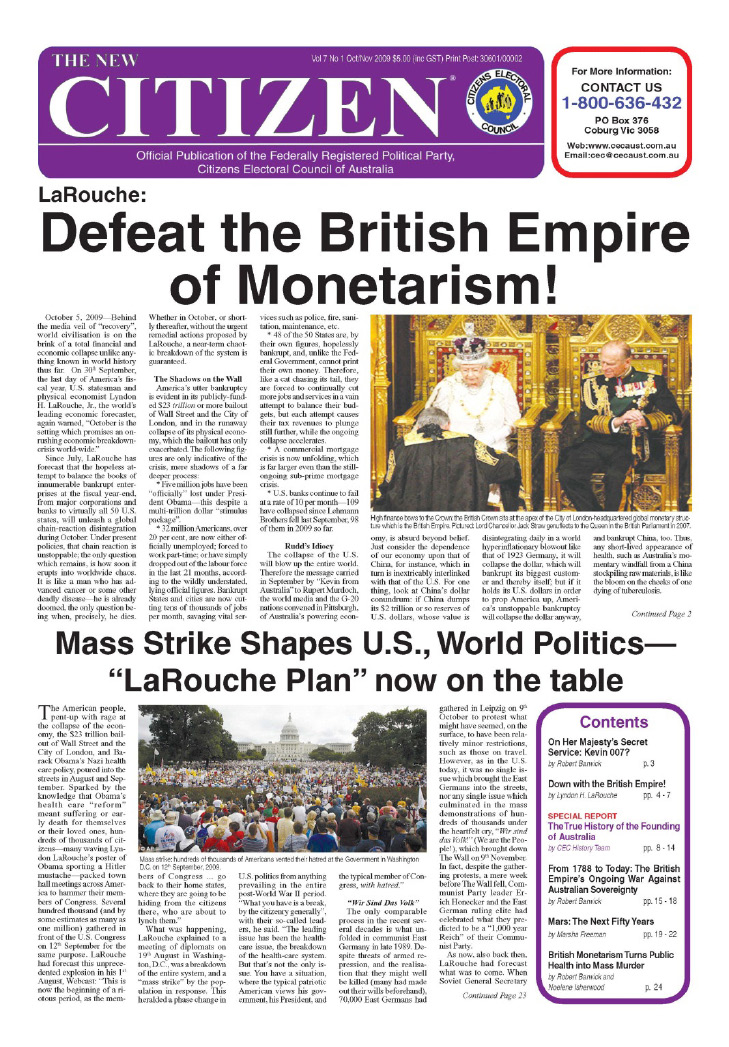
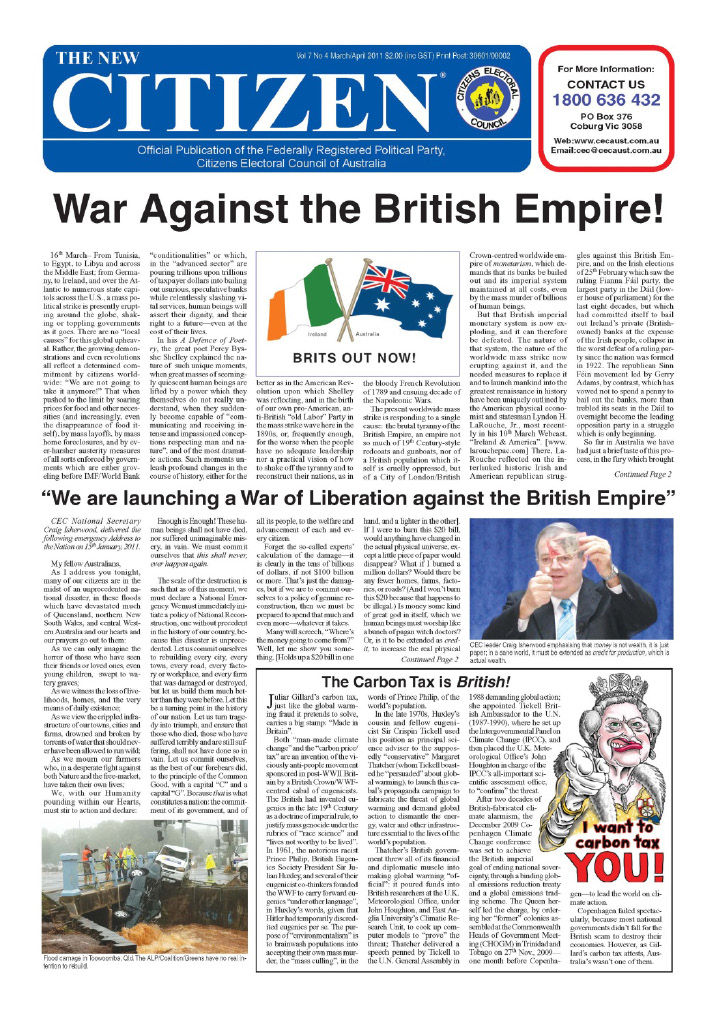
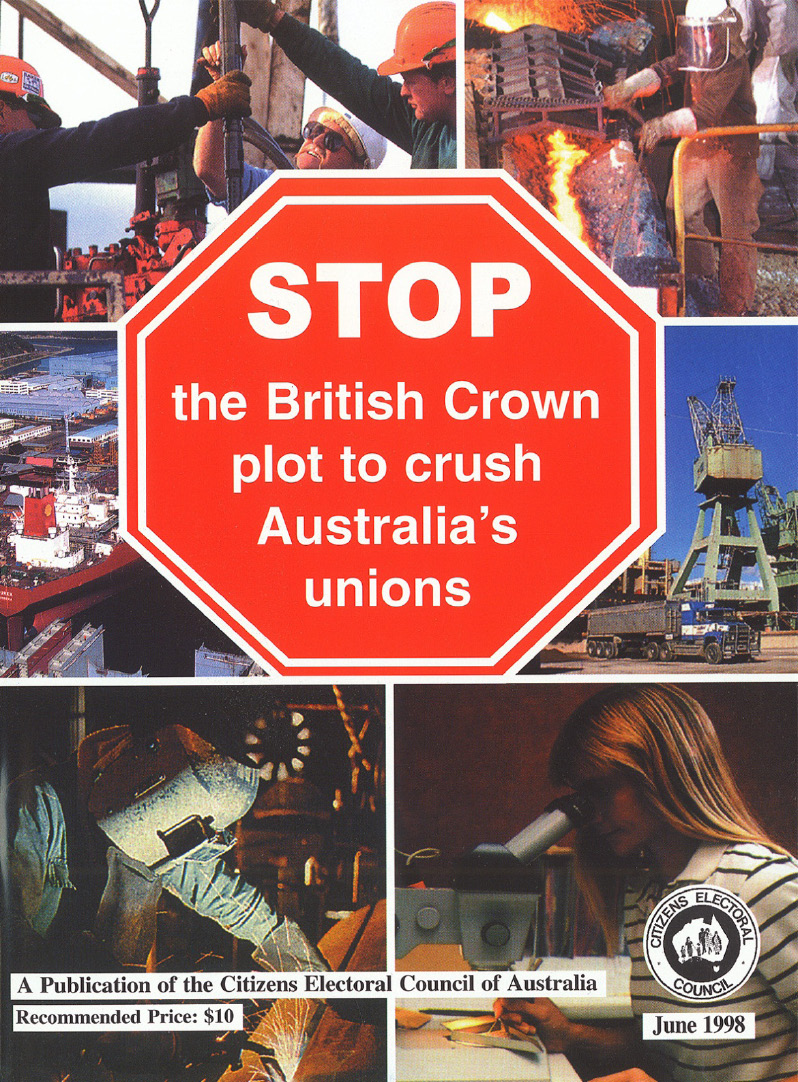
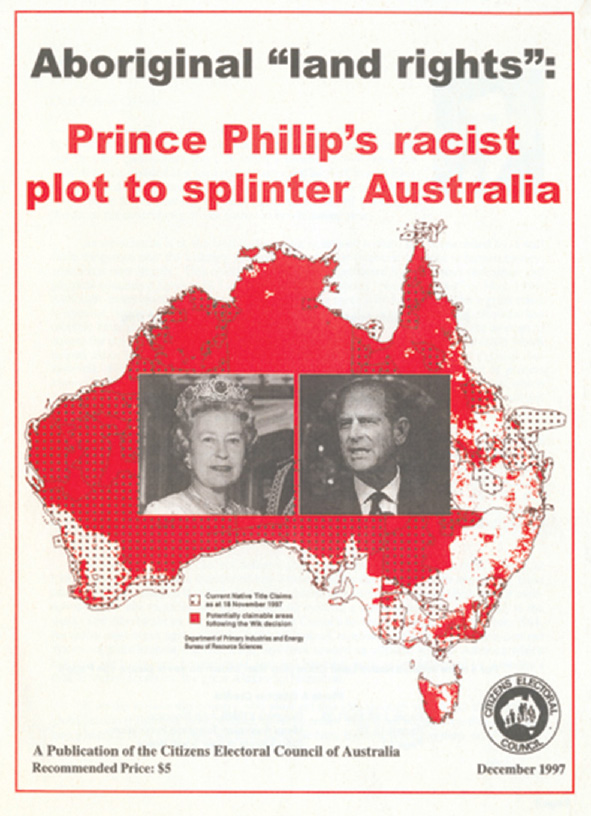
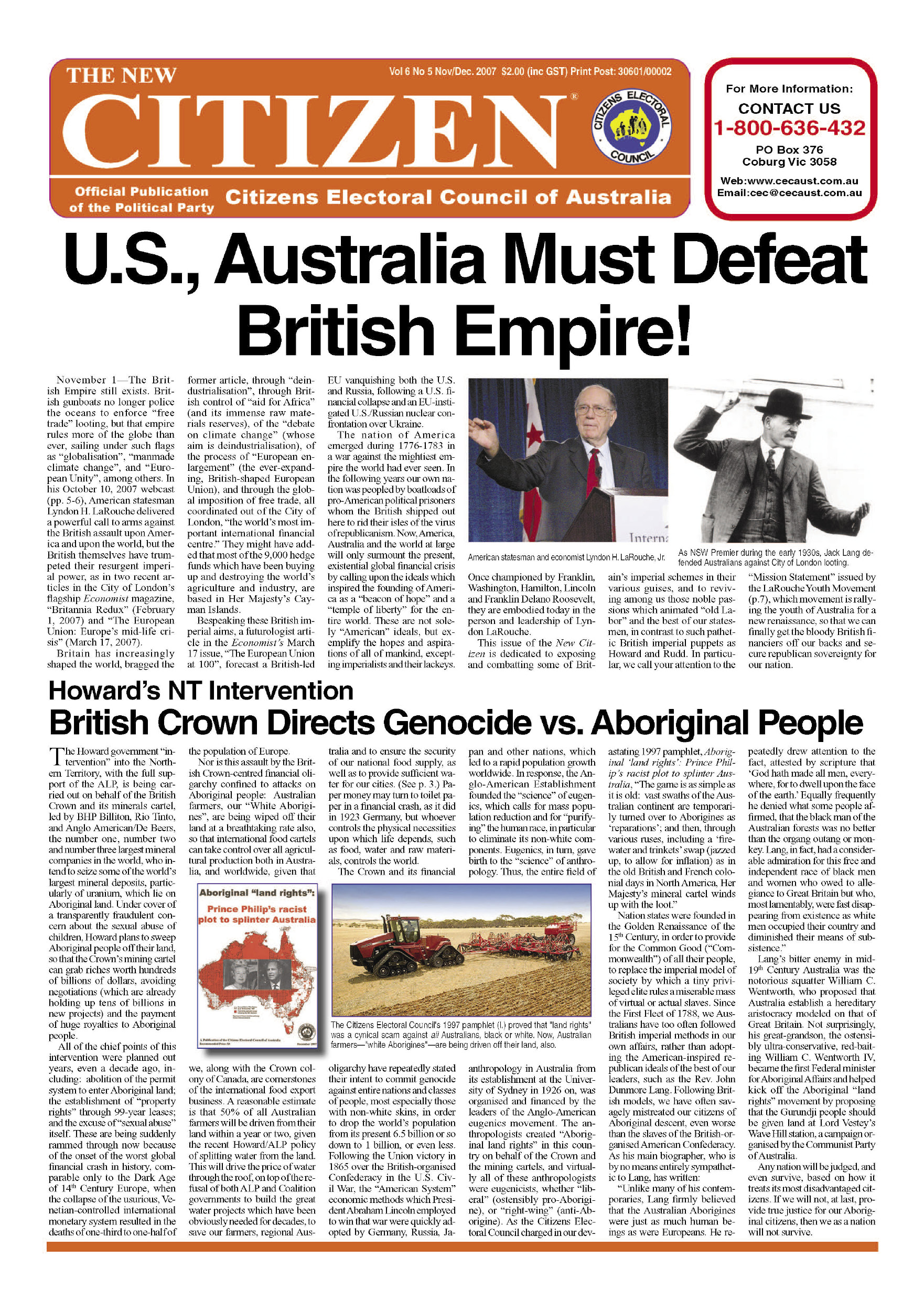
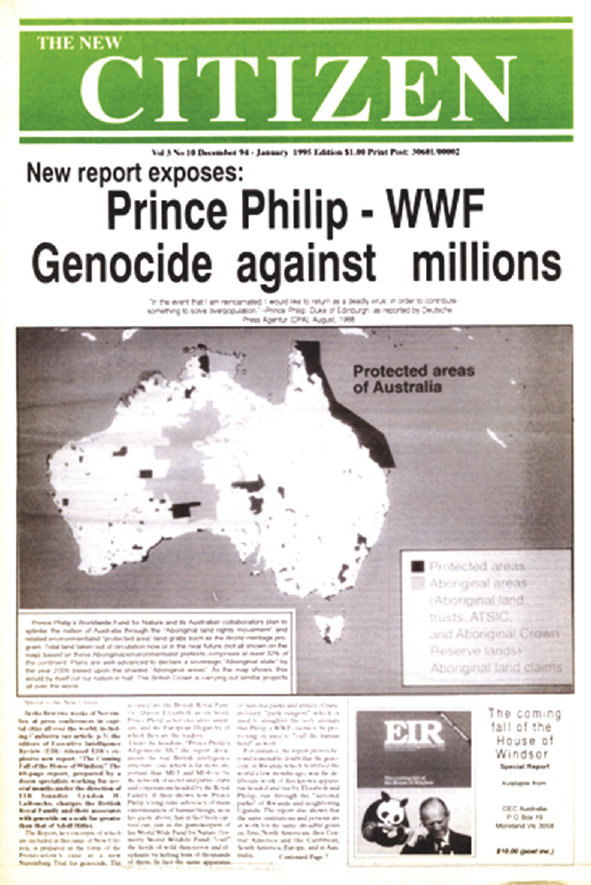
FIGURE 11
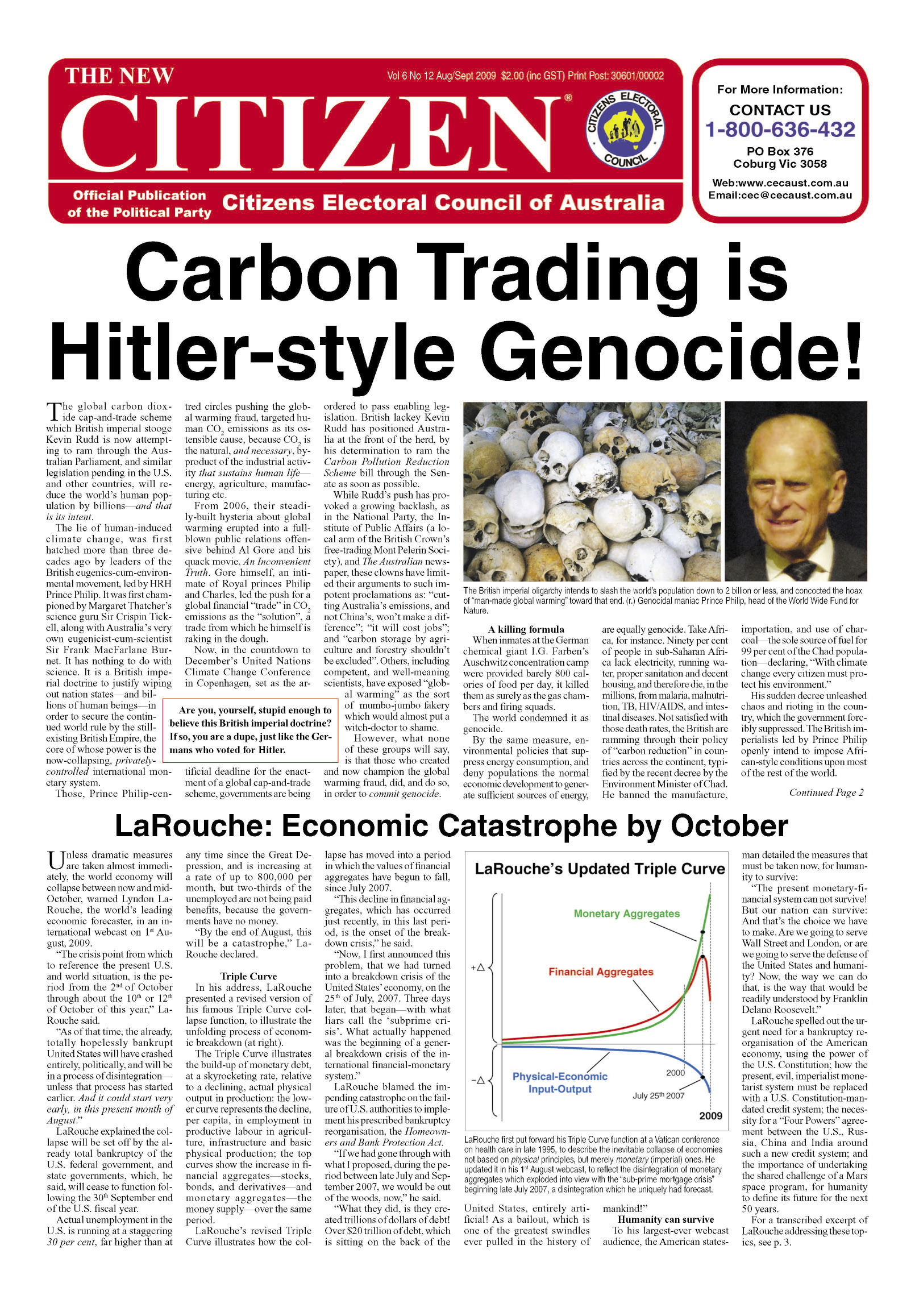
FIGURE 12
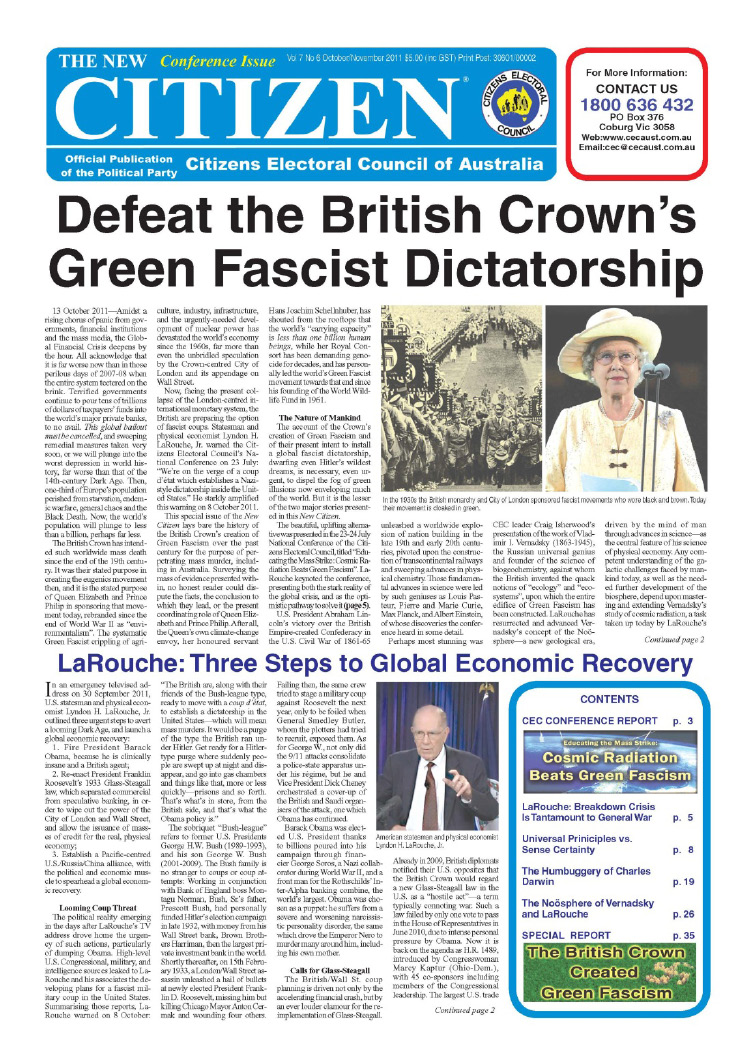
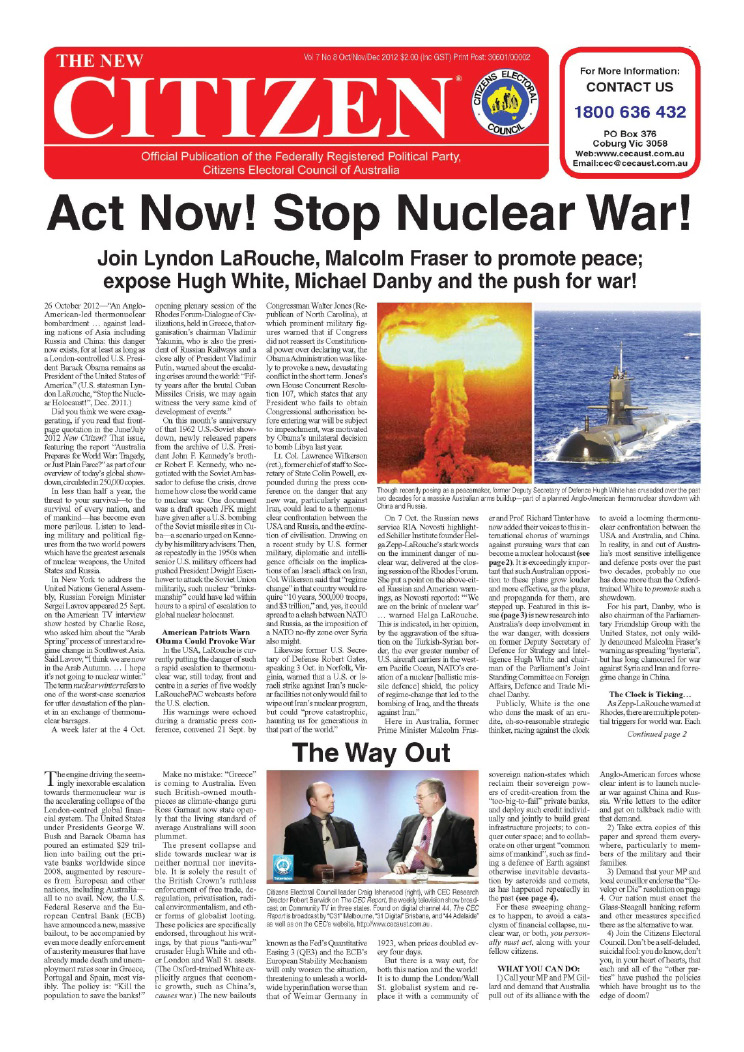
FIGURE 13
FIGURE 16
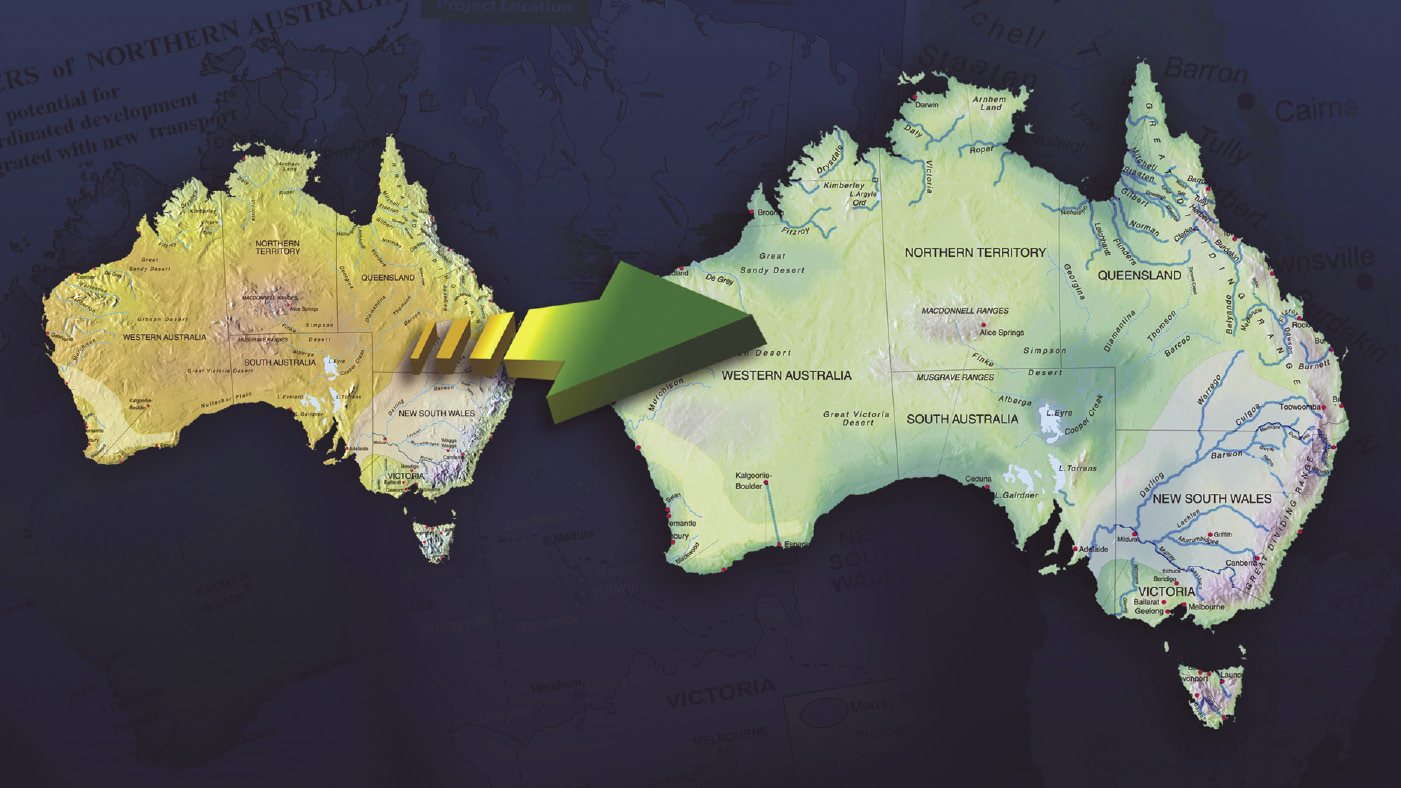
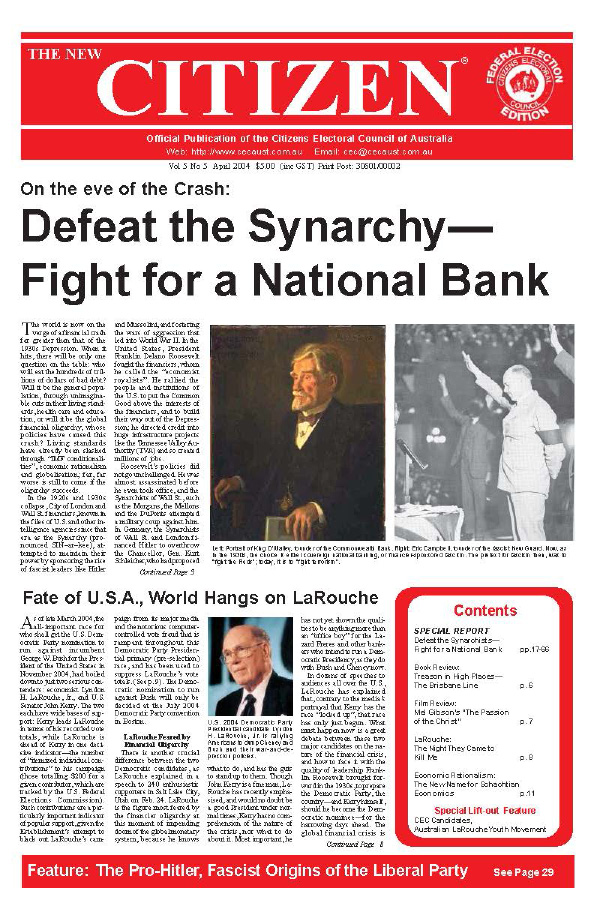
FIGURE 14
FIGURE 15
Hal Cooper
The Extended NAWAPA:
World Rail and Nuclear Power
Dr. Hal Cooper is a prominent American engineer and infrastructure expert. He gave this speech to the June 29 Schiller Institute Conference in San Francisco.
As has been pretty well indicated in this conference, we are at a crossroads: We are either going to follow the British path, with all of the bad things that it entails, or we’re going to follow another path, which is growth, development, and prosperity. And that’s what I’m going to talk about today.
I was asked to talk about three things. The first is California. We heard this morning that there are some serious water problems affecting our farming. Water has been severely restricted to the farms in the San Joaquin Valley. A lot of the land in farming has gone fallow. There is a preference for protecting fish in the delta, as compared to farms for growing food for people. The real problem is we have too many demands and not enough supplies for water. And the North American Water and Power Alliance (NAWAPA) project, with its extensions into California, as indicated in the most recent versions of the documents published by the LaRouche movement [http://larouchepac.com/infrastructure], really shows that.
We have agricultural demand which we’ve heard about; we haven’t heard much about city demands. Southern California actually has a preference over the water rights in the San Joaquin Valley, which they are now being forced to appropriate, because they are losing their access to the water in the Colorado River, which is being taken by Arizona, because of the prolonged drought in the Southwest.
There’s another demand: hydraulic fracturing of oil production. California has very large reserves of oil in the Monterey Shale (Figure 1). Some sources say it’s substantially larger than the Bakken formation in North Dakota, which I’m working on right now. It’s going to need water. Cities are going to need water, towns are going to need water, farms are going to need water. And we need to protect the water.
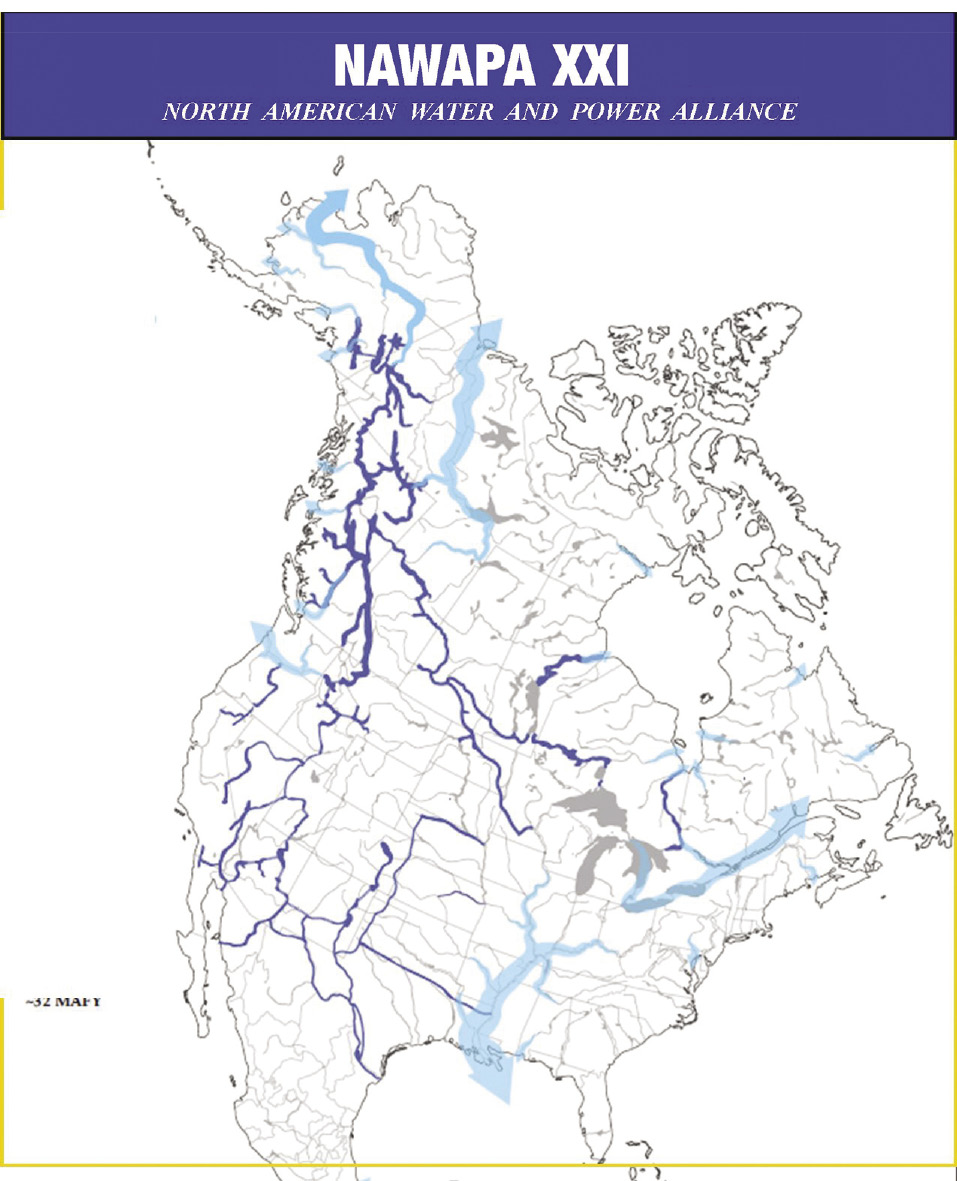
Governor Brown recently proposed building two tunnels, from Cortland on the Sacramento River, south of Sacramento, to Tracy, where the intake to the present California Aqueduct and Delta Mendota Canal is; and we’ve heard this morning that the San Luis reservoir, west of Los Banos, is at a very low level, and is not going to be able to sustain the needs of farmers and other water-users in the Central Valley. So we need to get another source of water: Which is the North American Water and Power Alliance project, which will add the water in the Upper Columbia River, at Micca Dam, in central British Columbia, coming from the Northwest Territories, Alberta, British Columbia, Yukon and Alaska, from the Yukon and McKenzie River Basins, which flow into the respective Pacific and Arctic Oceans.
We need to have that water: Having it come down the Columbia River, being able to increase the hydroelectric generating capacity of the dams on the Columbia River, and then, pumping the water south into eastern Oregon, into Goose Lake and the far southern Oregon, into the Pitt River Basin, which flows into the Sacramento River.
And we have another need for water in the Klamath River, which actually starts in Oregon, and goes into the far northwest of California; and right now, farmers and ranchers are going to be shut out of water, because the Indians have been given a preferential right to it by the Bureau of Reclamation of the U.S. Department of the Interior.
We Need More Water
Actually, this goes back to earlier times; when there was a lot of flow, the salmon and other fishing rights of the Indians were protected. But at the same time, there was enough water. What we need to do is add enough water to offset what has been taken out, and then, there’s water for everybody. That is one option that has not been considered. And the taking out of dams is not a smart idea! And that has become, basically, an official policy, and it actually exacerbates the problem, it doesn’t solve anything.
What we need is more water, and it can’t come from Oregon and California, it’s going to have to come from somewhere else: And that means the North American Water and Power Alliance project, which this organization has greatly promoted.
The Monterey Shale oil development, the first leases were just awarded in February of this year. How much and to what extent that oil development takes place remains to be seen. However, the oil and gas industry has enormous influence, and if it says it needs more water, it will get it. But we don’t want it at the expense of existing users, because right now, the fact of life in California, is that any new use of water has to take it away from an existing use. And without NAWAPA, we can’t solve that problem.
In addition to that, oil production takes a lot of people. It’s probably the most employment-intensive of the energy sources we have. I can certainly attest to that, working in North Dakota.
The California High-Speed Rail project—the construction contract for the first 26-mile section, from Maduro to Fresno (Figure 2), was awarded two weeks ago. That’s good. There’s been a lot of controversy about that project. What has been proposed needs to get built; but there needs to be another line along the west side of San Joaquin Valley, right next to Interstate 5, right next to the California Aqueduct, including to get people to work. And that would help a lot of things.
And of course, all those projects need to happen: the canal, the tunnels, the high-speed rail, the water, and the oil. California’s economy will be drastically transformed if that happens. It will certainly not follow the British model, or the Greek model. It will following the North Dakota model. It’s remarkable, the work in North Dakota, where they have a huge budget surplus, that probably is much greater than they say it is. Everybody who wants a job has one. Maybe they can’t all find a place to live, but they can certainly find a job.
The Bering Strait Tunnel
Now, the Bering Strait Tunnel (Figure 3): There’s been discussion about it, and sadly, in North America, primarily in this [the LaRouche] group; there hasn’t been much official discussion. But the real goal here is to connect Asia and North America together. The Russians are already working on it. They’ve already built the first section; it’s been in operation since December of 2011, from Neryungri to Nizhny Bestyakh, across the Lena River from Yakutsk. They need to build a tunnel or a bridge under or over the Lena River, to connect the capital of Yakutsk.
The second section, which would go to Magadan on the coast, by way of Oymyakon, in the Magadan region, is being designed now. They are planning to build, initially, single-track diesel, later, double-track electric, and a four-lane highway, and electric transmission, and probably natural gas pipelines too. And of course, that will all facilitate the development of northeastern Russia, whether or not the Bering Strait Tunnel gets built. It’s just that if it does get built, it’s going to generate much more traffic.
Eventually, over a 20-year period, their plan is to build out to the Bering Strait, and it will end in the far northeastern end of Chukotka, right across the Bering Strait from Wales, Alaska, and the Little and Big Diomede Islands. There’s no such effort in the United States.
However, Alberta [Canada] is in the middle of a big battle right now, in the middle of the Keystone Pipeline right now, which I’m sure most of you have heard about. Whether or not the Keystone Pipeline gets built remains to be seen—however, the oil and gas industry has suddenly gotten very comfortable moving oil by rail, especially in North Dakota: There’s over 5,000 barrels of oil a day being moved out of there now by rail. I’m working on some of that. And if Alberta is unsuccessful in getting pipelines built out to the west coast of British Columbia, because of opposition from the British Columbia government and the environmentalists, and the First Nations, etc. because of concerns over oil spills, we’ll just put it on a train and haul it to China. The only problem is, you’ve got to build the Bering Strait Tunnel to do it!
That’s a good way to sell it.
Because, next to those large banks, that Michael [Kirsch] and others have talked about in terms of their influence, probably the industry that has virtually as much influence, is oil and gas. And if they decide they want to haul it by rail, very likely it’s going to happen, and we would have developed ourselves a very powerful ally.
I presented this idea at the Oil Transport Conference in Houston in March, starting with building a railroad from North Dakota to Texas to haul oil, and the first question that I was asked when I finished my presentation, was, “Mr. Cooper, when are you going to start building this railroad?” This is coming from people in the oil business! These are not government people, they’re not rail lobbyists or fans. They realize the necessity.
So, a strategic corridor.
And there’s one other major source of traffic: Right up there in the northwest of Alaska is a huge coal deposit, at Point Lay. It’s owned by the Arctic Slope Regional Corp., which is the largest of the native corporations in Alaska. They have tried to develop their coal, with previous work with BHP Billiton, at least, and probably others, but nothing so far has happened. And they need to build a railroad. So far, no one was willing to build it. But if it gets built down to where the rail line to the Bering Strait Tunnel is, lots and lots of coal can get moved to China, along with lots and lots of oil from Alaska, Yukon Territory, and Alberta. And you’ll probably see a change in the view of the Canadian government about whether they should support the Bering Strait Tunnel, because, while they’re certainly a part of the British oligarchy, their economy is based on oil and gas. So there’s a reason for them to be thinking about that.
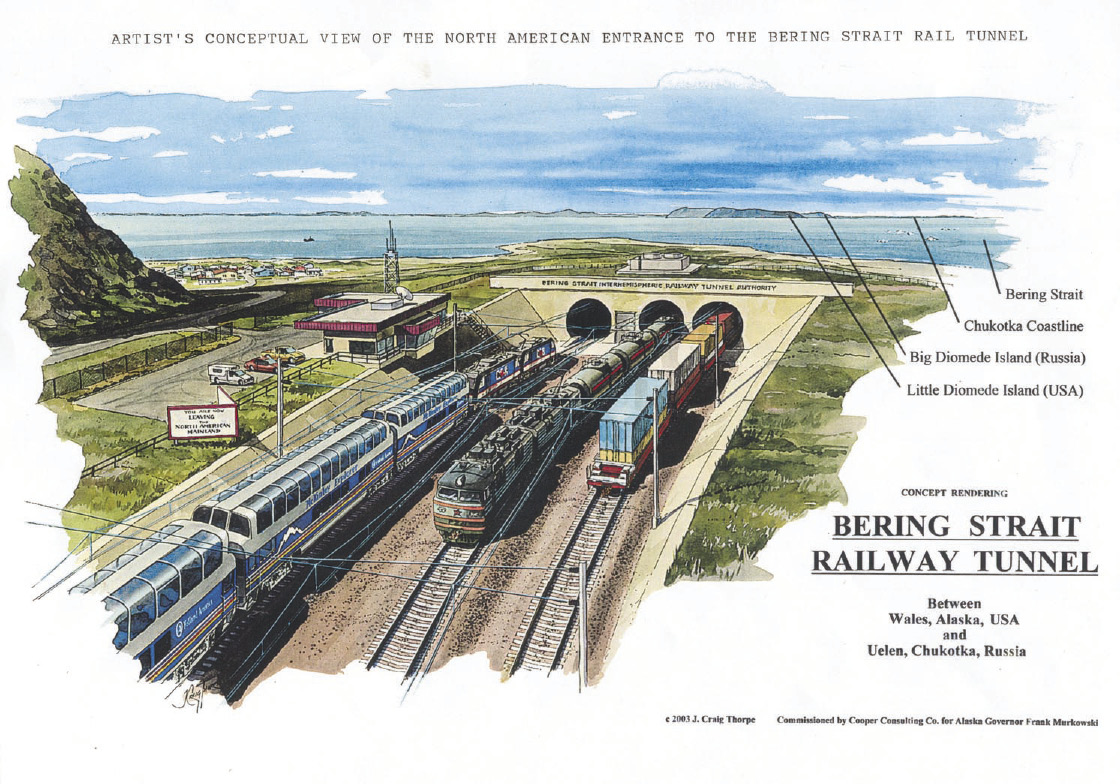
Now, this is what a conceptual view of the Bering Strait Tunnel entry point at Wales, Alaska would look like (Figure 4). It’s a painting done by Craig Thorpe. We show three tubes. Out there in the middle is Little Diomede Island, and behind that is Big Diomede Island, and way off in the distance is the Chukotka coast of Russia. It’s 53 miles, by the shortest distance, a tunnel about 65 miles long. Actually, in some respects it’s an easier tunnel to build than the English Channel Tunnel.
Now, the Russian government, the Russian Railway, is really, very much interested in seeing this developed, but there is one logistical problem that has to be addressed, because it affects other parts of their system, and other systems as well. And that is, the gauge is different, by three and a half inches: It’s just enough that you can’t run from one system to the other. My own personal opinion is, you should have a dual-gauge, double-track railroad, at the minimum. And possibly, two main tracks: A standard gauge going to China, and two Russian gauge tracks.
And on the Trans-Siberian Railway, there is now a great interest by the Russian Railway in moving lots of cargo from China to Europe, so they don’t have to run on the British ships through the Suez Canal and the ocean, which takes them much longer. The costs, believe it or not, are almost equivalent. And if the Russian Railway can increase its transit speed, and reduce its transit time between China and Western Europe, they’re going to get a lot of business. They already have plenty, but they were going to get a lot more. I think adding additional tracks to their standard gauge would probably help.
And of course, it’s definitely a superior alternative to dealing with the British oligarchy on the ships, which has always been their concern. Of course, there are people in the LaRouche organization, and that includes myself, who believe that World War I was started to prevent the first effort to build the Bering Strait Tunnel.
The Darién Gap
Now, Latin America: While there’s been a lot of talk about the Bering Strait, there hasn’t been that much about the Darién Gap (Figure 5). It’s possible to build a rail connecting Panama and Colombia, which really would mean Mexico and Colombia, through Central America; and it’s about a 1,700-mile railroad. And once we get into Colombia, we can have rail lines going into Brazil, and Argentina, and Chile, and Peru, and Ecuador, and Venezuela! And we should.
And I think that’s something that needs to be done. And the new President Enrique Peña Nieto in Mexico has talked about wanting to have joint development projects among the United States, Mexico, and Canada—maybe a high-speed rail line from Monterey to Mexico City would be a good idea.
But, connecting to this main rail line going up to the Bering Strait would be another one, and preferably from the freight standpoint, a good idea. But we could be hauling lots of cargo in that, and we would open up that entire region for economic development: four-lane highway, double-track railroad, at least; electric transmission lines.
There are efforts to build electric transmission lines between these countries, but so far, I’m not aware of any governmental efforts to really start to build a main railroad through all of Central America. But there should be.
There are some mountains to cross. The line would probably be built on the west side, because the logistics are easier, and it’s more direct, and you serve more of the population in the cities. But once you get into Colombia, and you have to go across the Tumarando Swamp, and go through the Darién Gap, and so forth, with overhead viaducts, and maybe a bridge over the Gulf of Urabá at northern end of Colombia, but after that, you’re going to be going up in mountains, as much as 7,000 feet.
And of course, the Andes Mountains are a formidable barrier to building railroads. Believe it or not, there is a railroad that’s now being proposed to be built between Mendoza in Argentina, and Santiago, Chile, for the purpose of trucks being hauled through the mountains. But it’s going to require tunnels, and there was a proposal to build a line from Ecuador to Brazil to haul iron ore, so it can come out to China.
And China has been very good about investing not only in Africa, but also in South America. And I think the difference between what they’re proposing to do, and what the Obama Administration is proposing to do, is, the one brings development, the other brings conflict, which certainly doesn’t sound like a very productive type of activity at this point.
And NAWAPA: NAWAPA, in conjunction with rail, with energy development for electricity, is essential for all this to happen (Figure 6).
And the world railway system (Figure 7). This is a map I developed a long time ago, I think back in 1997, or ’98, and of course, it’s been extensively shown, but this really is the concept of what we really need. We don’t need the British oligarchy breaking everybody down into little compartments, and manipulating everybody, and keeping everybody in poverty and starting wars and all that foolishness. We need economic development for the benefit of mankind.
I thank you.
LPAC-TV
FIGURE 2
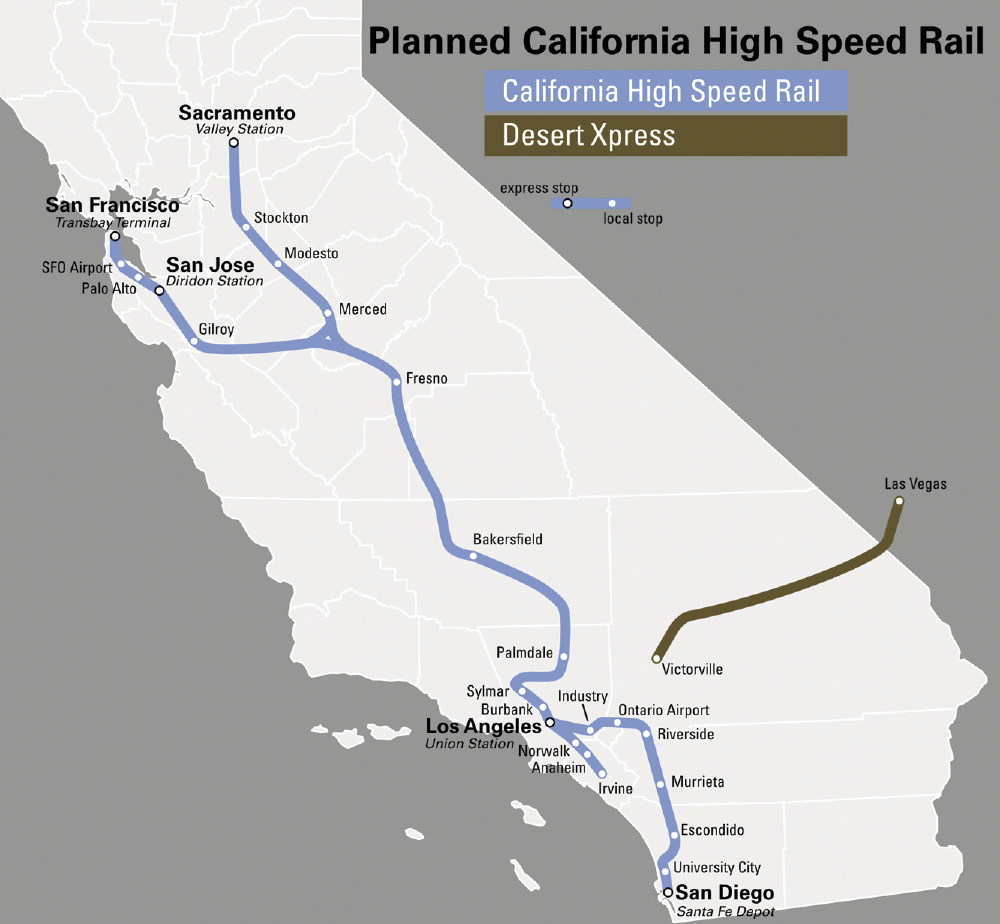
FIGURE 1
The Monterey Shale Formation
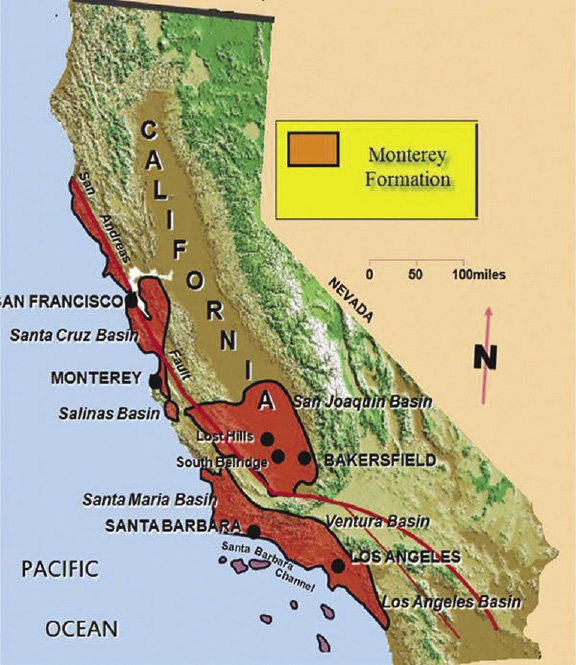
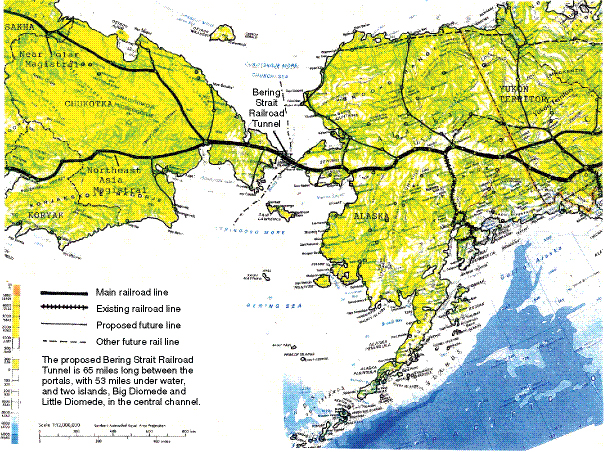
FIGURE 3
The Bering Strait Tunnel
FIGURE 4
Krupnov Issues Call for Revolution of Development
Yuri V. Krupnov, chairman of the board of the Institute for Demography, Migration, and Regional Development (IDMRD), and leader of the Development Movement, both based in Moscow, sent greetings to the Schiller Institute conference in San Francisco June 29. Krupnov is the author of several books, including one titled “In Russia, the Sun Rises in the East.”
Dear conference participants!
I greet the participants in this inspiring conference and hope that your work will be fruitful!
The American Revolution is an event of universal significance, which made it possible for the people of the United States to build a powerful and independent nation, and to set an example of making constructive transformations in the interests of all mankind.
Today the planet Earth again needs a new, creative and constructive revolution—a revolution of development, as an explosive upsurge for the prosperity of all peoples of the world, without exception.
This revolution of development is directly opposed to the chaos, which is cultivated in the interests of a thin layer of global elites, who are indifferent to the historical and cultural interests of mankind.
In this critical situation, the peoples of the U.S.A. and Russia have a special calling, because we both have the experience of carrying out constructive revolutions and super-intensive industrialization. Our task today is to move, through a new industrialization and new urbanization, to overcome destructive entropy and act to bring a new paradigm to life—the paradigm of development. This means to organize development on a planetary scale, relying on fundamental science, education, culture, and advanced industry.
The Pacific Ocean is of exceptional importance in this context.
The imperative for Russia’s own development today is to shift the center of our country toward the East, toward the Pacific Ocean, which in Russia was also always called the Great Ocean. For Russia, the Great Pacific Ocean is not some alien place; nor are Alaska and California alien for us, as you know from Fort Ross, which is nearby.
The time has come to transform the Great Pacific Ocean into a Great Development Zone for mankind.
And our task is to demonstrate to the entire world, through joint development projects, a model of a different socioeconomic way of life, centered upon the divine genius of every person, and upon respect for human history and culture.
The youth of our nations must play a decisive role in this.
Your energy, determination, imagination, and faith in the creative, constructive abilities of man, who has the capacity to transform the Earth into a blossoming garden—that is where the future lies and where there is hope!
Be bold! I believe in you and your projects.
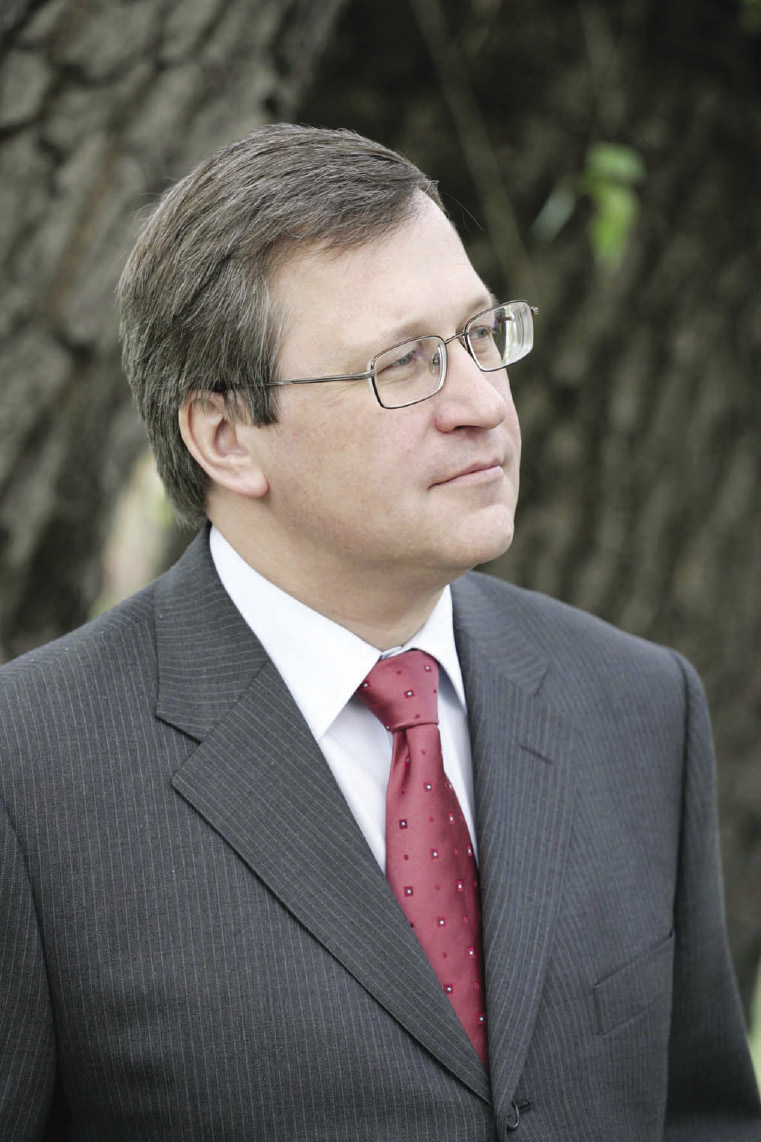
FIGURE 5
Proposed Route Options for the InterAmerican Railway Through the Darien Gap of Panama
Source: Hal Cooper/EIR
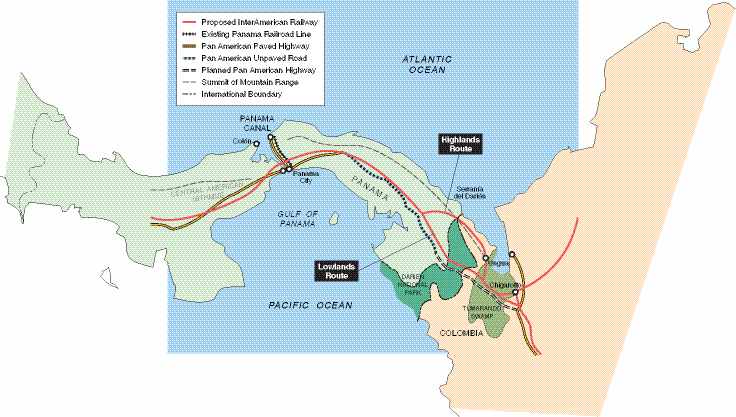
FIGURE 6